Bid and Ask Price in Forex: Why Trades Start Negative
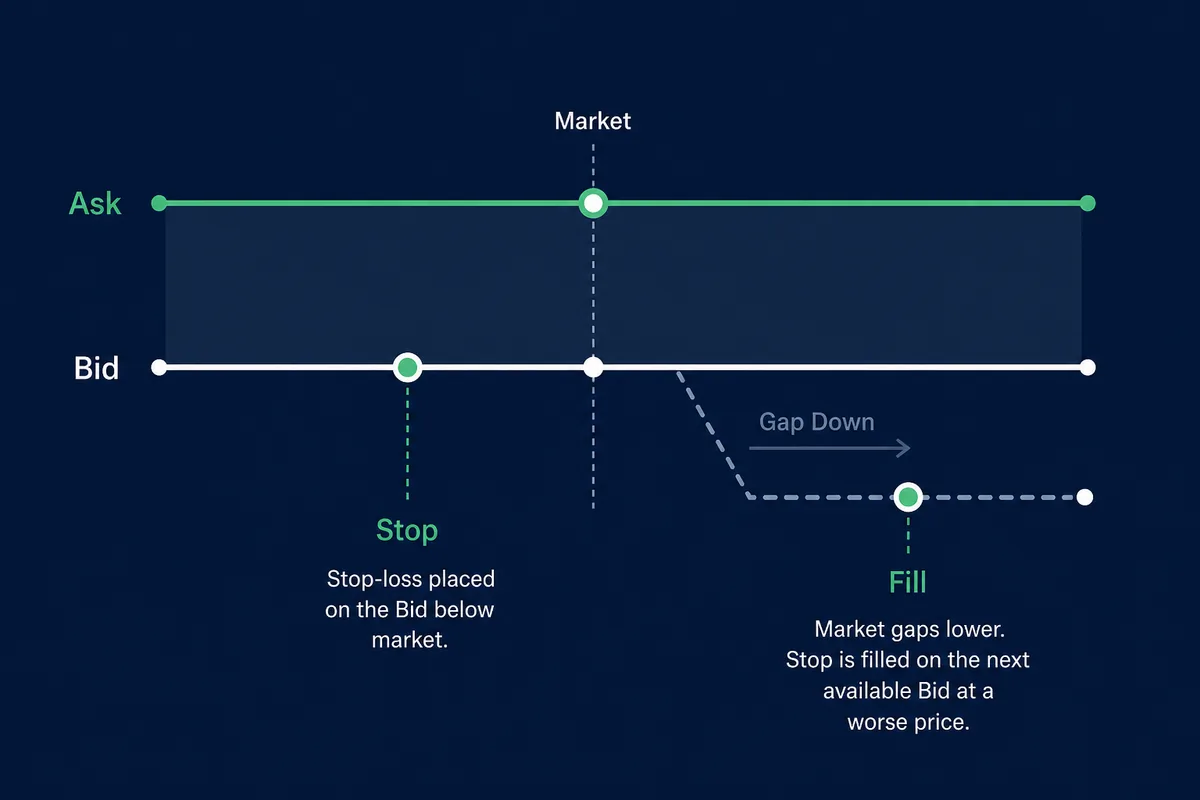
A practical beginner guide to bid price, ask price, spread, break-even, and why many forex trades appear negative immediately after opening.
Up-to-date market analyses, educational articles and trading strategies.
A practical beginner guide to bid price, ask price, spread, break-even, and why many forex trades appear negative immediately after opening.
A risk-first guide for beginners who want to trade forex news, covering CPI, NFP, Fed decisions, spread widening, slippage, demo drills, and safer alternatives.
A beginner-friendly guide to buying, selling, going long, and going short in forex, with EUR/USD examples, platform order-ticket tips, and risk warnings before the first live trade.
A beginner guide to RSI, MACD, moving averages, ATR, and Bollinger Bands, with simple use cases, common mistakes, and why indicators should support a trading plan rather than replace one.
A week-by-week map of what to expect in your first month of forex trading: demos, psychology, costs, common crashes, and the only metrics that prove you are learning — not gambling.
Read the four MetaTrader account numbers that confuse new XM and Exness traders: balance, equity, free margin and margin level—with worked examples, stop-out logic and first-week safety rules.
A practical 2026 guide to trailing stop-loss orders in forex: how trails move with price, pip vs ATR trails, server vs client side differences, examples, mistakes, and when fixed stops are better.
A 2026 educational guide to safe-haven behaviour in forex: why USD, JPY and CHF often firm in risk-off episodes, how gold interacts, what conditions reverse the pattern, examples, mistakes, and a practical monitoring checklist.
A practical 2026 system for scaling out of forex trades: partial take-profit ladders, residual runner trails, R-multiple bookkeeping, examples, common mistakes, and when full-exit targets beat partials.
A sourced 2026 explainer of pig-butchering (sha zhu pan) romance-investment scams that push victims into fake forex, crypto and metals platforms — the grooming timeline, red flags, what to do if hit, and how recovery-room frauds target the same people again.
Educational 2026 Fee Replacement Audit (FRA) for swap-free Islamic forex accounts: how admin fees, wider spreads, holding-time limits and instrument exclusions can replace overnight swap — and how MENA traders verify live Personal Area terms without treating this as a fatwa or broker ranking.
Educational 2026 guide to cash loss at a fixed stop under 1:100, 1:500 and unlimited-style leverage using the Leverage Loss Reality Table (LLRT): margin changes with leverage, but fixed-lot P/L does not — oversized lots do the damage.
ChatGPT and other LLMs can speed broker research, but they cannot verify your legal entity, live licence status, or payment path. Use the Broker Entity & Fit Checklist (BEFC-10) before any deposit.
A scored self-assessment for people who intend to start forex trading: capital, time, legality, knowledge, psychology, and goals — with clear bands for wait, demo-only, or consider live funding.
A clear 2026 explanation of forex swap (rollover / overnight financing): why positions held past the broker’s cutoff earn or pay interest, how long vs short swaps work, triple-swap Wednesdays, what the platform numbers mean, and when swap-free accounts change the cost structure.
A practical 2026 guide to how retail forex brokers earn: spread and commission, A-book (agency) vs B-Book (market-maker) execution, hybrid desks, swap and financing, and the conflict-of-interest checks every trader should run before depositing.
Why $50–$300 forex accounts often lose before strategy quality shows up: spread, commission and minimum lot size create a cost floor that skill cannot erase. When a small account is useful for learning — and when it is just a loss machine.
A complete 2026 guide to CFDs: what a contract for difference is, how P&L is calculated, CFD vs forex vs owning the asset, leverage and margin mechanics, costs, regulation caveats, and a practical checklist before you trade.
A practical start guide for people ready to try forex: honesty checklist, demo setup, first-week plan, risk rules, and clear go/no-go criteria before you deposit real money.
A practical first-demo-trade walkthrough for forex beginners: choose a major pair, define the stop first, calculate position size, place the order, and review the result without treating it as a trading signal.
A beginner-friendly comparison of fixed and variable forex spreads: how each model works, when spreads widen, which trader profile each fits, and what to check before choosing a broker.
A beginner-friendly guide explaining what day trading means, how it works, which markets people day trade, the difference from scalping and swing trading, main risks, tools, examples, and when beginners should avoid it.
An honest 2026 guide to why leverage — not bad chart reading — is the silent killer of most retail forex accounts: regulator data, margin-call math, the gap between 1:30 and 1:500, and the sizing rules that keep normal losing streaks survivable.
An honest 2026 breakdown of why trading too often — boredom trades, FOMO, revenge clicks — bleeds retail forex accounts through spread, slippage, and emotional sizing: the math, the psychology, and the daily rules that stop it.