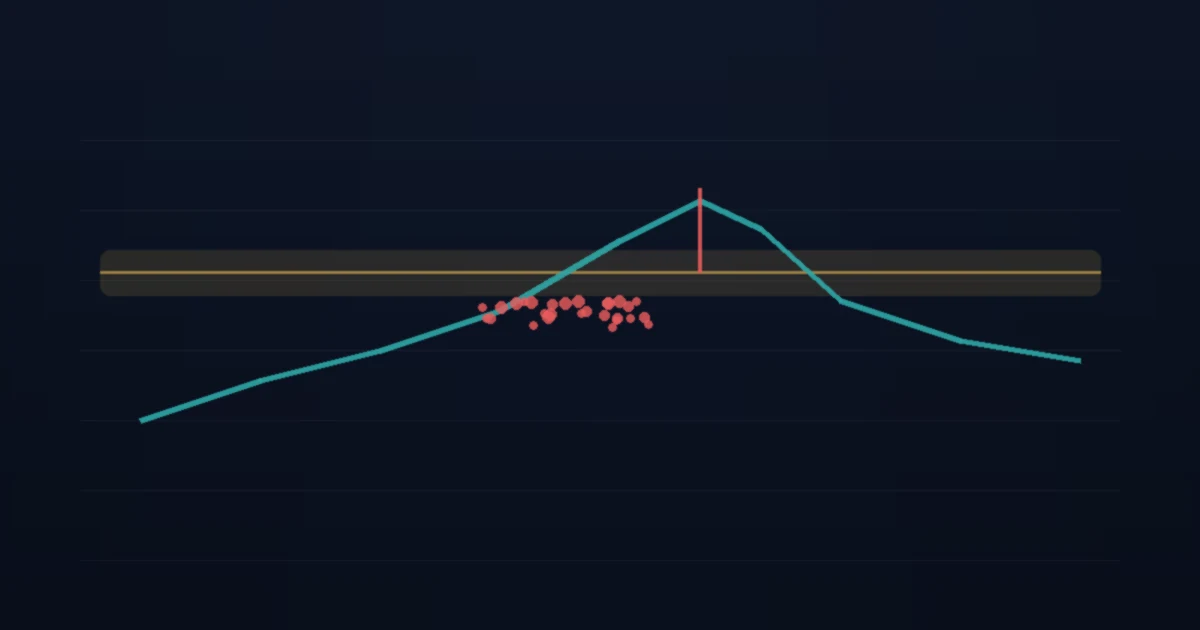
- Most ‘stop hunts’ are clustered orders at obvious swing highs, swing lows and round numbers — liquidity the market can print through
- A stop loss is an instruction, not a guaranteed price; news, gaps and thin books produce slippage that looks personal
- You cannot prove broker abuse from one painful wick; compare the print with independent prices and other platforms
- Place stops beyond structure plus a volatility buffer, then shrink size so cash risk stays fixed
- If fills are systematically worse only when you win, document them and escalate with the legal entity — that is a due-diligence issue, not a chart pattern
- Quick Answer
- Short Answer
- Detailed Explanation
- Example
- Common Mistake
- Professional Tip
- The Three-Cause Model: Cluster, Cascade, Conflict
- Short Answer
- Detailed Explanation
- Example
- Common Mistake
- Professional Tip
- Why Stops Cluster (and Why Wicks Look Personal)
- Short Answer
- Detailed Explanation
- Example
- Common Mistake
- Professional Tip
- Stops Are Instructions, Not Price Guarantees
- Short Answer
- Detailed Explanation
- Example
- Common Mistake
- Professional Tip
- How to Test a Wick in Ten Minutes
- Short Answer
- Detailed Explanation
- Example
- Common Mistake
- Professional Tip
- Placement Rules That Reduce Cluster Membership
- Short Answer
- Detailed Explanation
- Example
- Common Mistake
- Professional Tip
- Broker Model Versus Viral Lore
- Short Answer
- Detailed Explanation
- Example
- Common Mistake
- Professional Tip
- Checklist
- Glossary
- Related Reading
- Suggested Future Articles
Affiliate & risk disclosure: ForexTradeLab may earn a commission from qualifying broker links. That does not change your price or replace entity checks. See the affiliate disclosure and risk disclaimer.
Educational only: A stop loss reduces planned loss; it does not cap slippage in gaps or fast markets. Forex/CFDs are leveraged. A majority of retail CFD accounts lose money. This is not a claim about any single broker’s desk.
Quick Answer#
Short Answer
Do forex brokers hunt your stops? Usually the painful wick is clustered liquidity or slippage, not a dealer aiming at your ticket. Treat “hunt” as a diagnosis with three causes, then place stops where the idea is wrong, not where the crowd’s line sits.
Detailed Explanation
Spot FX is a decentralised OTC market. The BIS Triennial Survey measures enormous global turnover across many venues, not one pit with a single last price. Your MT4/MT5 chart is your broker’s book. Wicks can differ slightly between books and still be honest. What looks like a personal attack is often hundreds of retail stops stacked on the same swing low. Taking that liquidity can reverse price. That is why SMC liquidity sweeps and classic failed breaks look similar on a chart.
A different mechanism is physics: a stop is typically a stop-market style instruction. In a gap or a news vacuum it fills at the first tradable price. Weekend gaps and news spread/slippage logs describe that. Neither mechanism requires a villain.
The third mechanism is conflict: if a desk internalises flow, it can have an incentive problem. That is why A-book vs B-book and the legal entity matter. The CFTC forex fraud advisory and FCA unauthorised-firm warnings exist because some operators abuse clients. The remedy is evidence and registers — not assuming every wick is crime.
Example
You buy EUR/USD with a stop 1 pip under yesterday’s equal lows at 1.0800. London open prints 1.0794 and immediately trades to 1.0830. Three other platforms show a similar spike. That is a cluster event. It is not proof the dealer opened your ticket and steered the index.
Common Mistake
Putting the stop on the obvious line, getting tagged, then concluding the industry is fake. The placement created the cluster membership.
Professional Tip
If a wick appears on independent feeds, call it liquidity or news. If it appears only on your book, repeatedly, when you are in profit, start an execution file — that is due diligence, not a meme.
The Three-Cause Model: Cluster, Cascade, Conflict#
| Cause | What it is | How it looks | What to do |
|---|---|---|---|
| Cluster | Many stops rest at the same obvious price | Spike through a round number or equal high/low, then reversal, visible on multiple books | Place stops beyond the pool; size down |
| Cascade | Stops trigger more selling/buying, widening the move | Fast cascade during news or thin hours; spread explodes | Reduce size before events; accept slippage or stand aside |
| Conflict | Dealing practices or an unsafe entity | Repeated one-sided spikes not seen elsewhere, withdraw friction, register problems | Stop funding; verify the company on official registers; keep logs |
Short Answer
Name the cause before you change strategy. A cluster problem is a placement problem. A cascade problem is a calendar and size problem. A conflict problem is a counterparty problem.
Detailed Explanation
Cluster. Retail tutorials teach “stop below the last low.” Thousands of accounts then share a price. In any liquid market, resting orders are a target for flow that needs a fill. You do not need a conspiracy for price to print through 1.1000.
Cascade. Once stops fire, marketable flow can hit the next level of liquidity. During NFP or CPI the book is already wide. See NFP playbook and should beginners trade news. Your fill can be several times the planned R without anyone “hunting you” as an individual.
Conflict. Market-maker internalisation is legal in many jurisdictions when disclosed and supervised. It becomes a client problem when execution quality is unfair or the firm is unauthorised. Read the execution policy, the entity on the agreement, and how to choose a broker. ASIC’s CFD warning is about product risk, not a licence to skip entity checks.
Example
A Sunday open gaps through your Friday stop by 40 pips. Cause: cascade / gap, not cluster. The fix is Friday exposure rules, not a new indicator.
Common Mistake
Using “stop hunt” as a single word for all three rows. You then apply the wrong fix.
Professional Tip
In the journal, tag each tagged stop as C1, C2 or C3. After 30 events you will see which bucket actually costs you money.
Why Stops Cluster (and Why Wicks Look Personal)#
Short Answer
Stops cluster because education, round numbers and platform defaults push them to the same pixels.
Detailed Explanation
Typical magnets:
- Yesterday’s high/low and the current session’s high/low
- Equal highs / equal lows (double tops and bottoms)
- Round numbers and “big figures”
- Obvious trendline touches
- Tight stops a few pips beyond a wick that already marked the extreme
Price action and support/resistance tell you where those magnets are. Liquidity runs often are the failed break you were taught to fade — after the fact. Entering on the first breakout through the magnet is how you become the liquidity.
Session quality matters. Market hours and slippage are not optional colour. A 12-pip wick on EUR/USD in London overlap is noise. The same wick on a thin exotic at 03:00 server time can be the entire day’s range.
Example
Hypothetical: 1.2500 on GBP/USD has three Daily touches. Your stop is 1.2498. You are in the cluster. A stop at 1.2470, with lot size reduced so cash risk is unchanged, is outside the first pool. You can still be wrong. You are less likely to be the first liquidity taken.
Common Mistake
Tightening the stop after entry “to reduce risk.” You usually increase the chance of dying in the cluster while keeping the same lot size — which increases cash risk if you then re-enter.
Professional Tip
Measure the last 20 wicks beyond the level on that pair and session. If your buffer is smaller than the median wick, you are volunteering.
Stops Are Instructions, Not Price Guarantees#
Short Answer
A stop reduces planned loss. It does not lock the print.
Detailed Explanation
On retail CFD platforms a stop typically becomes a marketable order when the trigger trades. If the next bid/offer is through your line, you get slippage. That is why stop-loss placement must include a volatility buffer, and why trailing stops can exit in chop for reasons that feel like hunting.
Negative balance protection is a separate product feature. It may cap the account below zero on eligible entities; it does not rewind a slippage fill. Margin call vs stop-out is what happens when you did not use a stop at all, or when losses consume margin.
Example
Stop at 1.1000. News print gaps to 1.0965. Fill 1.0968. The platform did not “hunt to 1.0968 for fun.” There was no continuous tradable path at 1.1000.
Common Mistake
Believing a guaranteed stop is standard on every retail FX/CFD account. Guaranteed stops, where they exist, are a paid product with conditions. Read the spec; do not assume.
Professional Tip
If you cannot afford the slippage scenario, you cannot afford the trade. Size for the ugly fill, not the line on the chart.
How to Test a Wick in Ten Minutes#
Short Answer
You need a second clock and a second price, not a forum thread.
Detailed Explanation
- Write the stop logic (structure vs round number vs “felt tight”).
- Check the economic calendar and whether the market was in a scheduled window.
- Open a second broker demo or a recognised charting platform and compare the high/low of that bar.
- Compare wick length with ATR or a simple average true range of the last two weeks on the same timeframe.
- Check spread at the minute of the fill from your journal or from a spread log.
If independent prices show the same spike, you experienced market structure or event structure. If only your account printed an outlier spike, save:
- Ticket number, server time, symbol
- Bid/ask screenshot
- Fill versus trigger
- Legal entity name from the agreement
Then read broker due diligence for larger accounts and scam warning signs. The FCA CFD page is about product intervention and disclosure culture, not a verdict on your last trade.
Example
You were tagged by 0.8 pips through a low. ATR(14) on H1 is 28 pips. Independent charts show the same low. Classification: cluster noise. Change placement, not broker — unless other due-diligence flags exist.
Common Mistake
Posting one MT4 screenshot with no timestamp, no second feed, and no calendar, then demanding a regulator treat it as proof.
Professional Tip
Build a 20-row fill log before you conclude anything about a desk. Sample size of one is how superstition starts.
Placement Rules That Reduce Cluster Membership#
Short Answer
Stop where the idea dies, then shrink volume. Do not hide 2 pips behind a magnet.
Detailed Explanation
| Placement | Typical problem | Better default |
|---|---|---|
| 1–3 pips beyond a round number | You are in the first liquidity pool | Beyond the zone plus a wick buffer |
| Exactly at the last wick extreme | Next equal low takes you out | Structure + ATR fraction (for example 0.2–0.4 ATR, tested per pair) |
| Tight stop, same lot size | High tag rate, same cash disaster when it runs | Wider stop, smaller lot, same $ risk |
| No stop, “mental” | Stop-out and panic | A real order, sized |
Use ATR stop guidance and the 1% risk rule. For gold, point value changes the math: how much capital for XAU/USD.
Price-action traders should still treat a sweep as information, not as an automatic reverse entry. Wait for a close back in the zone. That is the same discipline as failed breaks in the price-action guide.
Example
Idea invalid below 1.0810. Median extra wick 8 pips. Stop 1.0800 with size cut so $ risk equals your 1% cap. You may lose more often on noise than a 1.0812 stop would — or less, depending on the pair. Test, do not copy a YouTube pip count.
Common Mistake
Adding a 50-pip “anti-hunt” buffer on a $200 account without cutting lots. You have not avoided hunting; you have built a blow-up.
Professional Tip
If the logical stop is so wide that 1% risk forces a volume smaller than the broker’s minimum, skip the trade. That is the correct anti-hunt rule for small accounts.
Broker Model Versus Viral Lore#
Short Answer
Execution model changes incentives. It does not identify your last wick.
Detailed Explanation
A-book / STP-style handling earns primarily on volume and costs. B-book internalisation can earn when clients lose. Hybrids are common. None of those sentences tell you what happened at 15:30 London. They tell you what documents to read.
Red flags that belong in the conflict bucket:
- Entity not on the register it advertises
- Withdrawals blocked after profits
- Prices that detach from other books as a habit, not around news
- Guaranteed-return marketing — see CFTC materials
Those are scam and safety issues. They are not solved by a new stop-loss indicator.
Example
A clone website offers 1:2000 leverage and a “no loss EA.” That is not stop hunting. That is a fraud-pattern problem. Do not fund it to “test the hunt theory.”
Common Mistake
Staying with an unauthorised firm because “my entries are good, only the stops are hunted.”
Professional Tip
Licence and withdrawal tests beat folklore. Run a small first withdrawal test before you care about wicks.
Checklist#
- Stop sits beyond invalidation, not on the magnet
- Buffer compared with recent wick/ATR on that session
- Lot size recomputed after the buffer
- News and weekend exposure decided in advance
- Fill log includes a second price source when something feels “off”
- Entity, execution policy and register checked if outliers repeat
- No revenge re-entry at the same magnet two minutes later
Next step: practise stop placement on demo using structure plus a volatility buffer, and size with the lot calculator. If you evaluate a live broker later, confirm the legal entity and current terms. XM availability is country-dependent and is not protection against clustered liquidity.
Glossary#
- Stop hunt (retail slang) — A spike through obvious stops followed by a reversal; not a legal term.
- Liquidity pool — A price area where resting stop and limit orders are likely dense.
- Slippage — Difference between trigger price and fill price.
- Cascade — Sequential triggering of stops that extends a move.
- Conflict of interest — When the firm’s revenue can rise if clients lose, requiring policy and supervision.
- Guaranteed stop — A product feature, where offered, that fills at a specified price for a cost; not universal.
Related Reading#
- Price action trading framework
- False breakout forex guide
- How to set stop-loss and take-profit
- How brokers make money (A-book vs B-book)
- Forex market hours, liquidity and slippage
- Weekend gap risk
- Risk management guide
Suggested Future Articles#
- How to build a 30-trade slippage and wick log (spreadsheet fields)
- Guaranteed stop-loss orders: when the fee is worth it
- Equal highs and equal lows: a liquidity-magnet map for majors
Risk warning: CFDs are leveraged. Stops do not guarantee the exit price. A majority of retail client accounts lose money. Examples are educational. Confirm execution rules with your broker and read the ForexTradeLab disclaimer.
Comments
Add a useful note for other traders. We review comments before publishing.