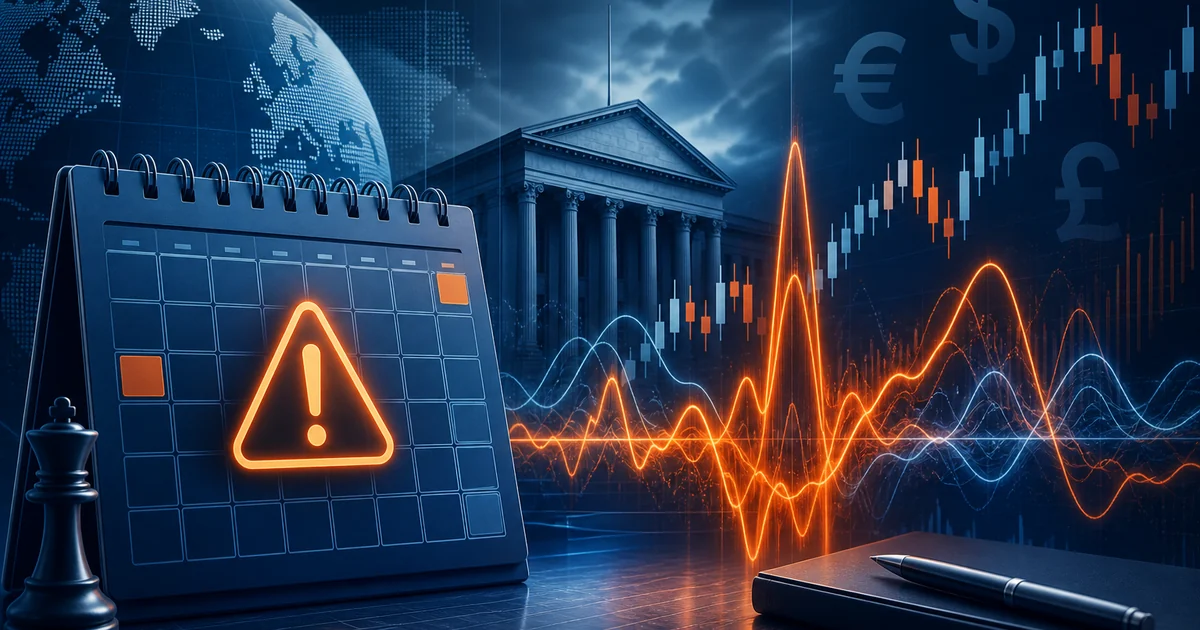
- Major news can move price faster than beginner execution
- Spread and slippage often worsen around releases
- The first job is observation, not prediction
- Demo drills are better than live guesses
- A no-trade rule is a valid beginner strategy
Quick Answer#
Most beginners should not trade major forex news live. CPI, NFP, Fed decisions, and surprise central-bank statements can create fast candles, spread widening, slippage, false breakouts, and emotional decisions.
Beginners should first use a safer sequence:
- Observe news on demo.
- Record spread and price behavior.
- Wait for post-news structure.
- Trade tiny only after rules are tested.
Read this before NFP trading guide, USD news trading playbook, and economic calendar events.
Risk warning: News trading can produce fills worse than expected. Stop-losses can slip, spreads can widen, and price can reverse sharply.
Why News Is Dangerous#
Short Answer
News can move price faster than a beginner can think, click, or adjust.
Detailed Explanation
Major news changes expectations. If inflation surprises, employment data misses, or a central bank signals a different path, currency pairs can reprice in seconds. The first move is not always the final move. Price may spike one way, reverse, then settle somewhere else.
This environment punishes oversized positions, tight stops, and delayed decision-making. It also creates emotional pressure because the chart looks like an opportunity.
Example
EUR/USD spikes up after CPI, then reverses below the pre-news price within minutes. A beginner who chased the first candle can be stopped out before understanding what happened.
Common Mistake
Believing big movement means easy profit.
Professional Tip
For beginners, "no trade during the release" is not fear. It is a valid rule.
Spread and Slippage#
Short Answer
The trade price during news may be worse than the chart price you expected.
Detailed Explanation
Around high-impact releases, liquidity can thin and spreads can widen. Market orders may fill at worse prices. Stop-loss orders may slip. Pending orders can trigger in a fast move and enter at an unattractive level.
This is why a backtest that ignores spread and slippage can make news trading look easier than it is.
Example
A trader plans a 10-pip stop. During the release, spread widens and price gaps through the stop. The final loss is larger than the planned number.
Common Mistake
Using the same lot size during NFP that you use in a quiet market.
Professional Tip
Record spread before, during, and after three major releases before you consider any live news trade.
Better Beginner Approach#
Short Answer
Observe the release, then trade only after price structure becomes clearer.
Detailed Explanation
Many beginners do better by avoiding the first minutes and waiting for the market to form a range, retest, or clearer trend. This reduces excitement and gives spreads time to normalize. It also lets the trader define a stop-loss based on structure rather than panic.
The goal is not to catch the exact first candle. The goal is to survive and learn.
Example
Instead of trading the NFP release at the second it drops, a beginner watches 15 to 30 minutes, marks the high and low, and only considers a demo trade if price forms a clean retest.
Common Mistake
Entering before reading the actual data, revision, and market reaction.
Professional Tip
Use a post-news waiting rule: no entries until spreads return near normal and at least one candle closes after the initial shock.
Demo News Drill#
Short Answer
Practice news events as observation drills before making them trading events.
Detailed Explanation
A useful drill includes the forecast, previous number, actual number, first candle, spread change, 15-minute reaction, and whether the move followed or faded. This teaches how messy real news can be.
The drill should be done on demo or without trades. After enough examples, you may discover that avoiding news is your best edge.
Example
For CPI, record EUR/USD, USD/JPY, gold, DXY if available, spread at T-5 minutes, T release, and T+15 minutes.
Common Mistake
Watching only the pair that moved the most after the fact.
Professional Tip
Build a folder of 20 news screenshots. Pattern memory improves faster with visual evidence.
Checklist#
Short Answer
Do not trade news live unless rules, execution risk, and loss limits are already written.
Detailed Explanation
Before any live news trade:
- Know the event and release time.
- Know forecast, previous, and revision risk.
- Check spread behavior.
- Reduce size or skip.
- Use a hard daily loss cap.
- Avoid revenge trades after whipsaws.
- Journal the execution, not only the result.
Example
"No live trade during the first 15 minutes after NFP" is a strong beginner rule. It prevents the most chaotic decision window.
Common Mistake
Changing the rule because the last release would have made money.
Professional Tip
If you cannot explain why the news matters to the currency, you should not trade it live.
Bottom Line#
Beginners should treat forex news as a classroom first and a trading opportunity later. CPI, NFP, and Fed events are powerful, but power is not the same as predictability.
Next read economic calendar events, bid and ask price, and forex market hours and slippage.
Comments
Add a useful note for other traders. We review comments before publishing.