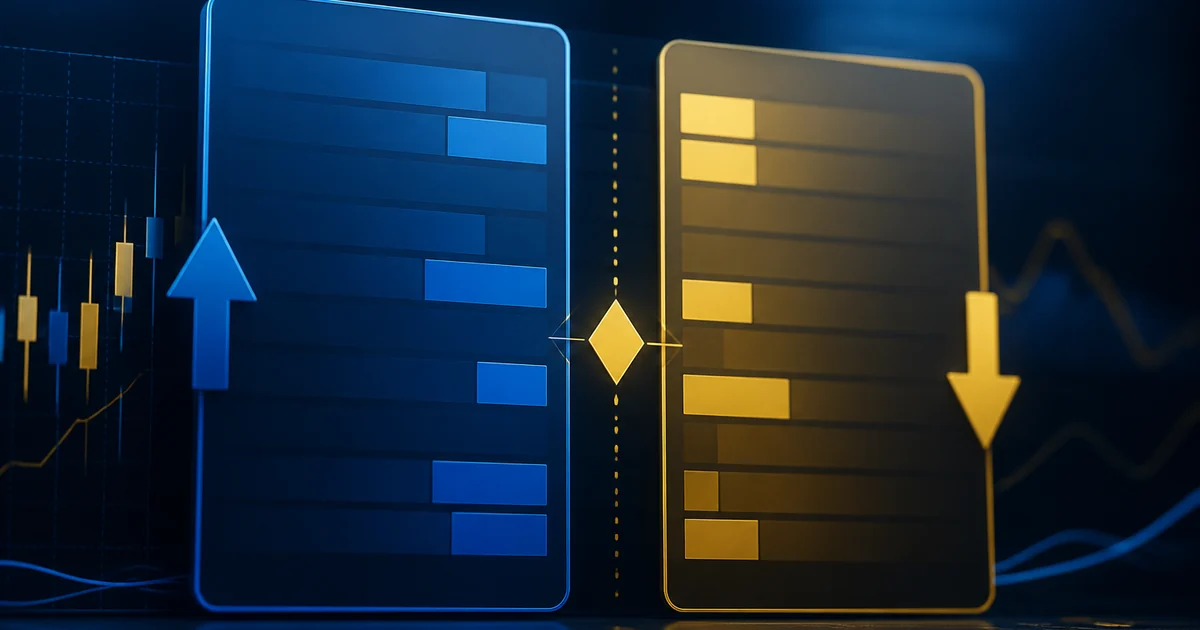
- Bid is the sell price
- Ask is the buy price
- Spread is the gap between bid and ask
- A new trade often starts negative because closing immediately would use the opposite side of the quote
- Wider spreads make small-account and scalping trades harder

Quick Decision Framework#
Short Answer
The bid is the price where you can sell a currency pair, and the ask is the price where you can buy it. The ask is normally higher than the bid. The difference is the spread, which is why many trades show a small loss immediately after opening.
Detailed Explanation
If you buy at the ask and immediately close at the bid, the spread is already against you. That gap is a transaction cost, not a platform error. Wider spreads make small-account and scalping trades harder because the first ticks must recover the round-trip before any edge appears. Session, instrument and news conditions change the gap; gold and off-hours majors often quote wider than EUR/USD in the overlap.
Example
You buy EUR/USD at the ask. The position immediately shows a small minus equal to the spread because a market close would fill at the bid, not at the price you just paid.
Common Mistake
Closing a new trade in panic because it opened slightly negative, or ignoring a wide ask–bid gap on gold and still using a 5-pip scalp target.
Professional Tip
Before you click Buy, read both bid and ask on the ticket, compute the spread in pips, and check that your stop and target still make sense after that immediate cost.
Quick Answer#
The bid price is the price where you can sell a forex pair. The ask price is the price where you can buy a forex pair. The ask is usually higher than the bid, and the gap between them is the spread.
That gap explains why many trades start slightly negative. If you buy at the ask and immediately close at the bid, the spread is already against you.
Before trading live, connect this article with what is spread, long vs short in forex, and forex market hours.
Risk warning: Spread, commission, slippage, and leverage can turn a small directional mistake into a large account loss. Always test order tickets on demo first.
Bid Price#
Short Answer
Bid is the price at which you can sell the pair.
Detailed Explanation
When a platform shows two prices, the bid is normally the lower one. If you hold a long position and want to close it, you sell back to the market at or near the bid. If you open a short position, the sell entry is also based around the bid.
This is why the bid matters even when you are a buyer. Your profit on a Buy position is not measured only by the pretty chart line. It depends on the price where you can actually exit.
Example
EUR/USD shows 1.1000 / 1.1002. The bid is 1.1000. A trader who wants to sell now is working from 1.1000 before execution details.
Common Mistake
Looking only at one chart price and assuming every order executes there.
Professional Tip
On demo, open the market watch panel and watch bid/ask during a quiet hour and during a news release. The difference teaches more than a definition.
Ask Price#
Short Answer
Ask is the price at which you can buy the pair.
Detailed Explanation
The ask is normally the higher price. If you click Buy, the order is filled around the ask, not the lower bid. A new Buy position may therefore show a small floating loss because the position would close through the bid.
For beginners, this is the first real lesson in trading costs. You do not need to be wrong for a trade to start negative. The market simply has two sides.
Example
EUR/USD shows 1.1000 / 1.1002. If you buy, your entry is around 1.1002. If the bid later reaches 1.1003, you are only slightly beyond spread before other costs.
Common Mistake
Thinking the negative number at entry proves the platform is broken or the broker is cheating.
Professional Tip
If you scalp, record average spread by session. A strategy with a 4-pip target cannot ignore a 2-pip spread.
Spread and Break-Even#
Short Answer
Spread is the difference between bid and ask, and price must move enough to cover it before the trade is net positive.
Detailed Explanation
Spread is an embedded transaction cost. Major pairs such as EUR/USD usually have tighter spreads than exotic pairs, but spreads still change with liquidity, volatility, account type, and broker execution.
Spread is especially important for small accounts. If a trader uses tight stops and tiny targets, the spread becomes a large percentage of the planned trade. That can make a strategy look profitable on paper but weak in execution.
Example
If EUR/USD has a 0.8-pip spread and your strategy targets 8 pips, spread is 10% of the target before commission. If an exotic pair has a 5-pip spread and your target is 10 pips, half the target is already consumed.
Common Mistake
Comparing brokers only by minimum spread and ignoring average spread, commission, slippage, and session quality.
Professional Tip
Write "all-in cost" in your broker notes: spread plus commission plus typical slippage. That is the number that matters.
When Spreads Widen#
Short Answer
Spreads can widen during news, rollover, low-liquidity sessions, and sudden volatility.
Detailed Explanation
Beginners often learn bid and ask during calm markets, then get surprised when quotes expand. Around CPI, NFP, central bank decisions, or the daily rollover window, liquidity can thin and market makers can widen quotes. A stop-loss can be filled worse than expected, and a pending order can enter at a price that looks different from the chart snapshot.
This does not mean every spread widening event is abuse. It means the market is less stable at that moment. The practical response is to reduce size, avoid tight stops, or skip the event.
Example
A pair that normally shows 1 pip of spread may show 5 or more pips around a major announcement. A beginner strategy that depends on tiny targets can fail instantly under that condition.
Common Mistake
Trading news with the same lot size and stop distance used in quiet Asian-session conditions.
Professional Tip
Set a personal rule: no new beginner trades in the minutes before major data until you have studied at least 20 demo examples.
Beginner Checklist#
Short Answer
Read bid, ask, spread, session, and planned exit before every order.
Detailed Explanation
Before clicking:
- Identify the bid and ask.
- Know whether your order uses bid or ask.
- Convert the spread into pips.
- Compare spread with your stop and target.
- Check the economic calendar.
- Avoid trading if the spread is abnormal for that pair.
Example
"EUR/USD spread is 0.8 pip, target is 20 pips, stop is 25 pips, no major news in the next hour." That is a cleaner environment than "spread is jumping and CPI is in three minutes."
Common Mistake
Calling a broker cheap because one screenshot showed a tight spread.
Professional Tip
Take three screenshots of the same pair at different times of day. Build your own spread memory instead of trusting a marketing table.
Bottom Line#
Bid and ask prices are the plumbing behind every forex trade. If you understand them, the "instant negative trade" stops feeling mysterious and starts becoming a cost you can plan around.
Next, read what is spread, why a stop-loss fills worse than the price you set, best leverage for beginners, and forex risk management.
Comments
Add a useful note for other traders. We review comments before publishing.