
When the Minimum Lot Is Too Big for Your Account
What to do when your broker’s minimum lot already risks more than your 0.5%–1% cash cap: the honest demo-only decision, worked $50–$500 examples, and how not to ‘fix’ the trade.

Topic archive
Short answer: page 2 of the Risk Management archive lists 24 earlier ForexTradeLab articles from Jul 2026.
What to do when your broker’s minimum lot already risks more than your 0.5%–1% cash cap: the honest demo-only decision, worked $50–$500 examples, and how not to ‘fix’ the trade.
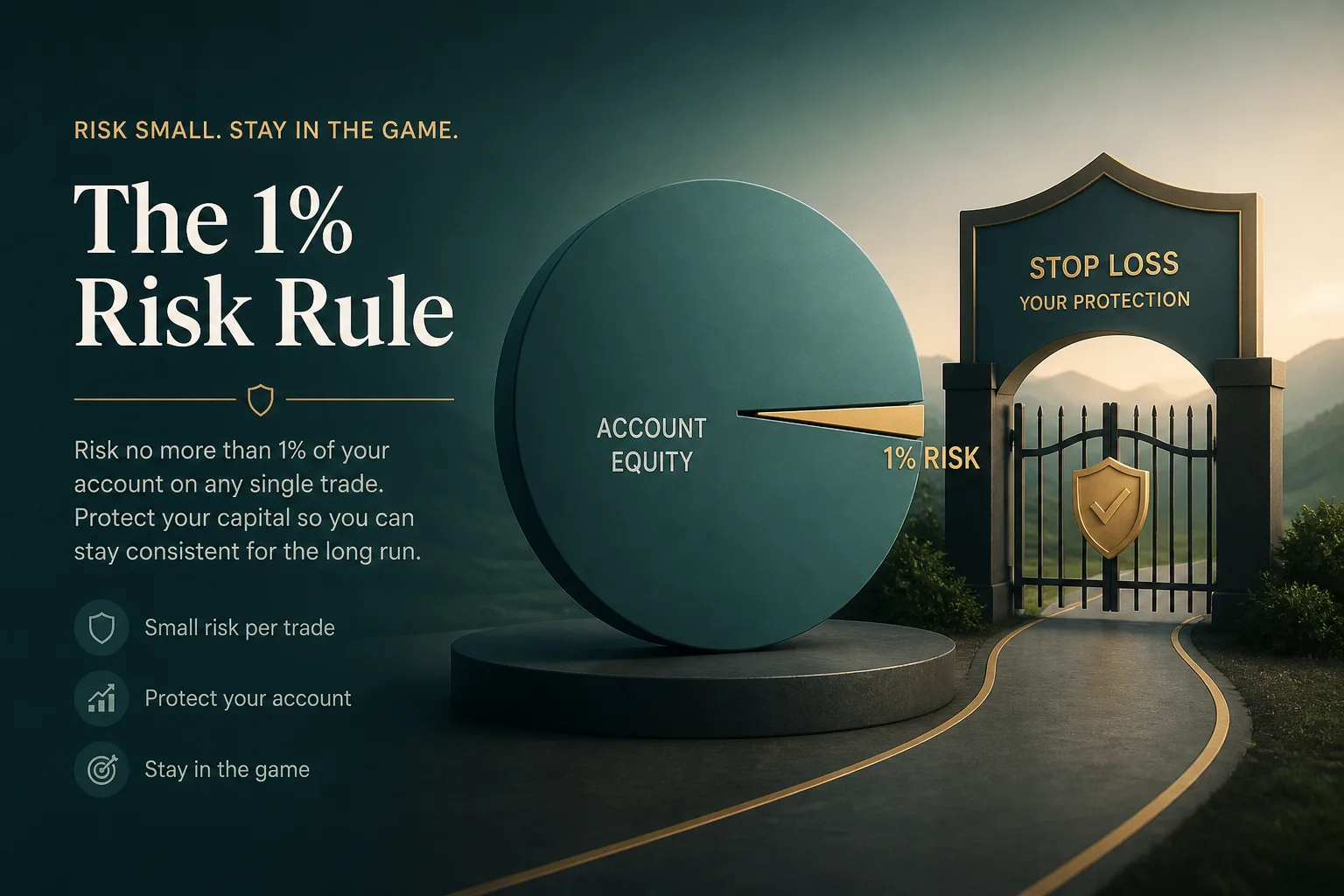
What the 1% risk rule means in cash and lots: $100/$500/$1,000 examples, how stop distance sets volume, when 0.5% is wiser, and what to do when minimum lot breaks the rule.

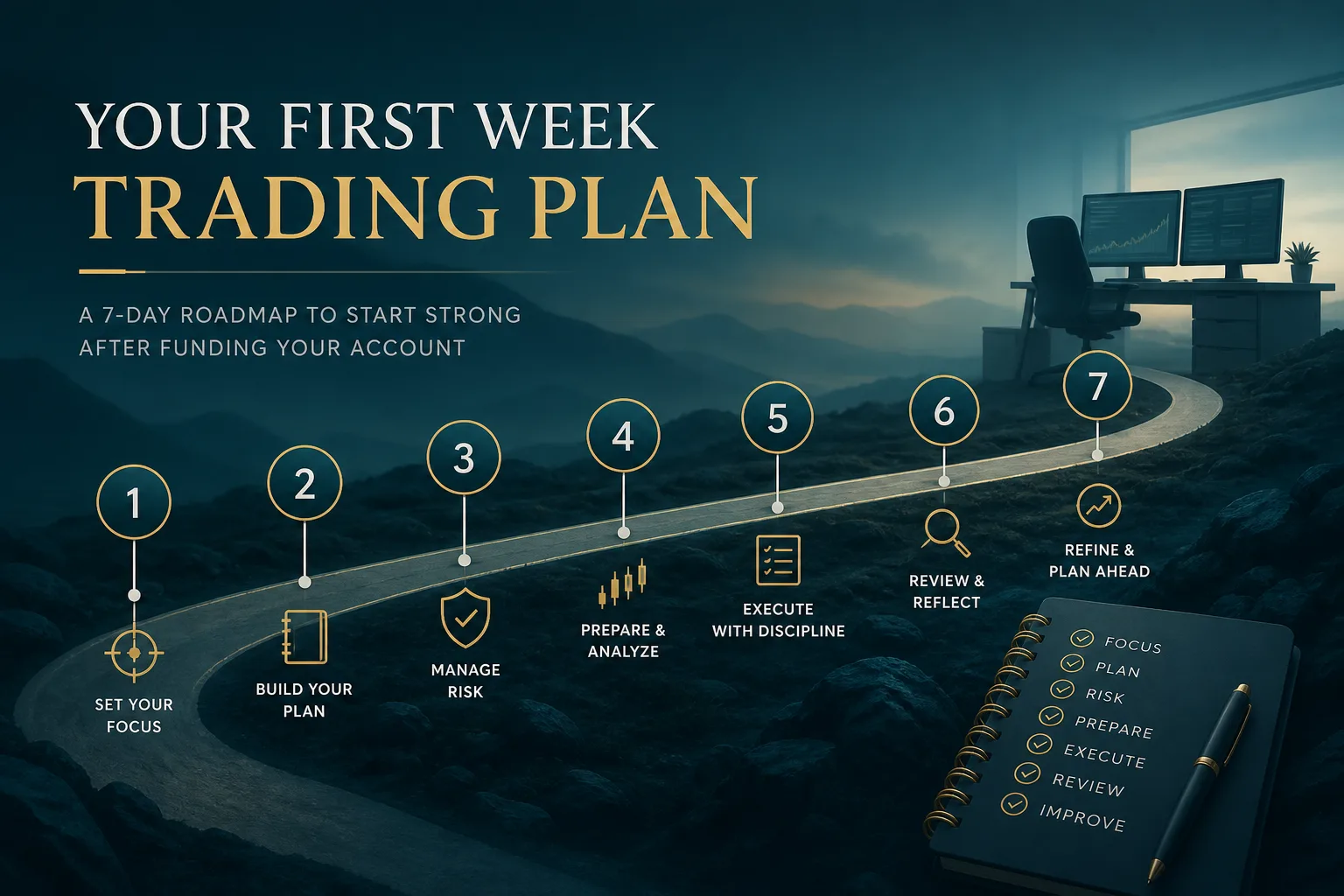
A practical 7-day plan for new XM funders: verification checks, platform setup, calculator drills, first micro trade, journal rules and a small withdrawal test before scaling.

Broker-agnostic math for what 0.01 lot makes or loses on EUR/USD and gold: pip/point value tables, spreads, stop-loss dollars and when micro volume is still too large.

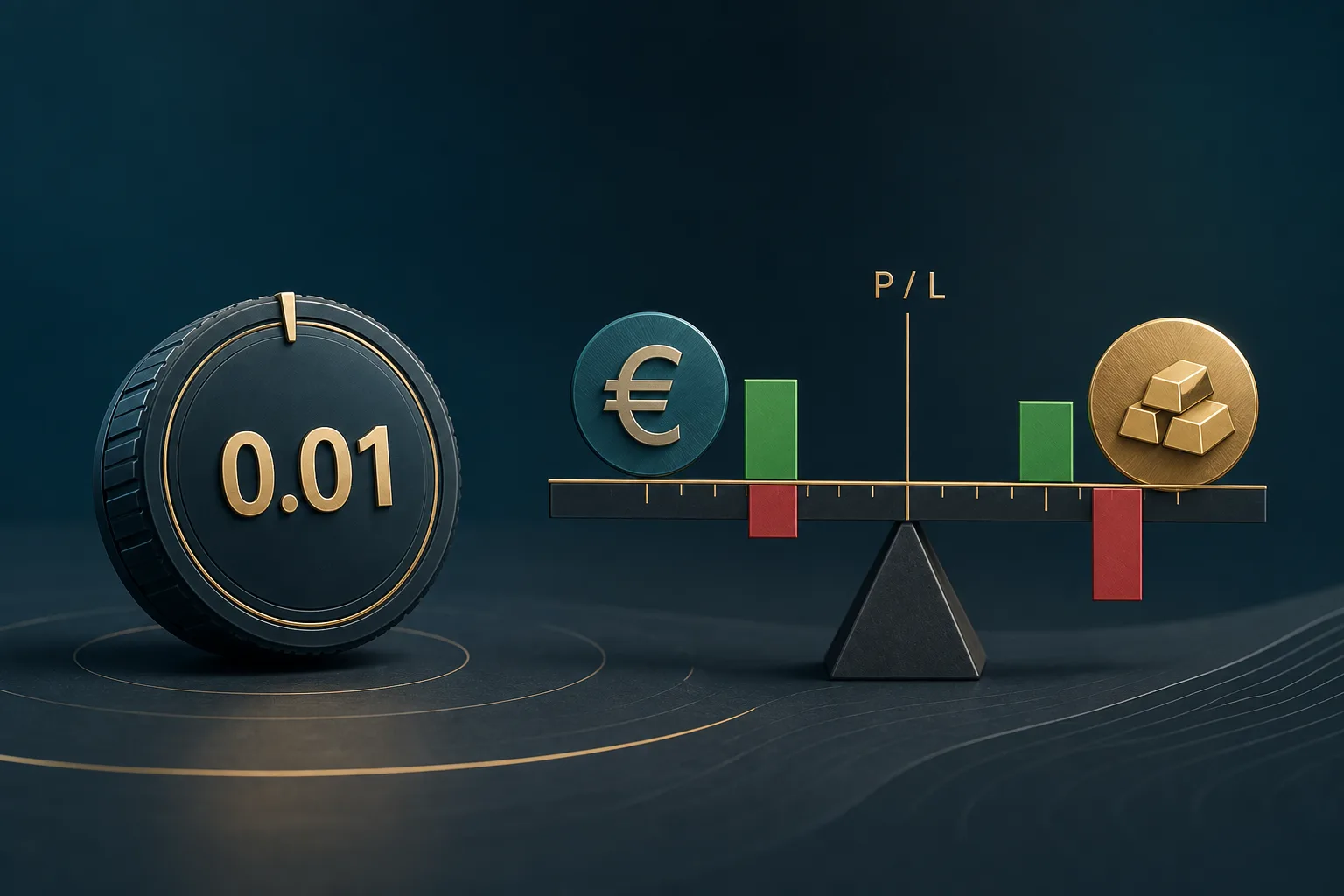
Clear educational math for XM micro lots: what 0.01 lot means in dollars on EUR/USD and XAU/USD, worked P/L examples, spreads, stops and why 0.01 is not automatically safe.
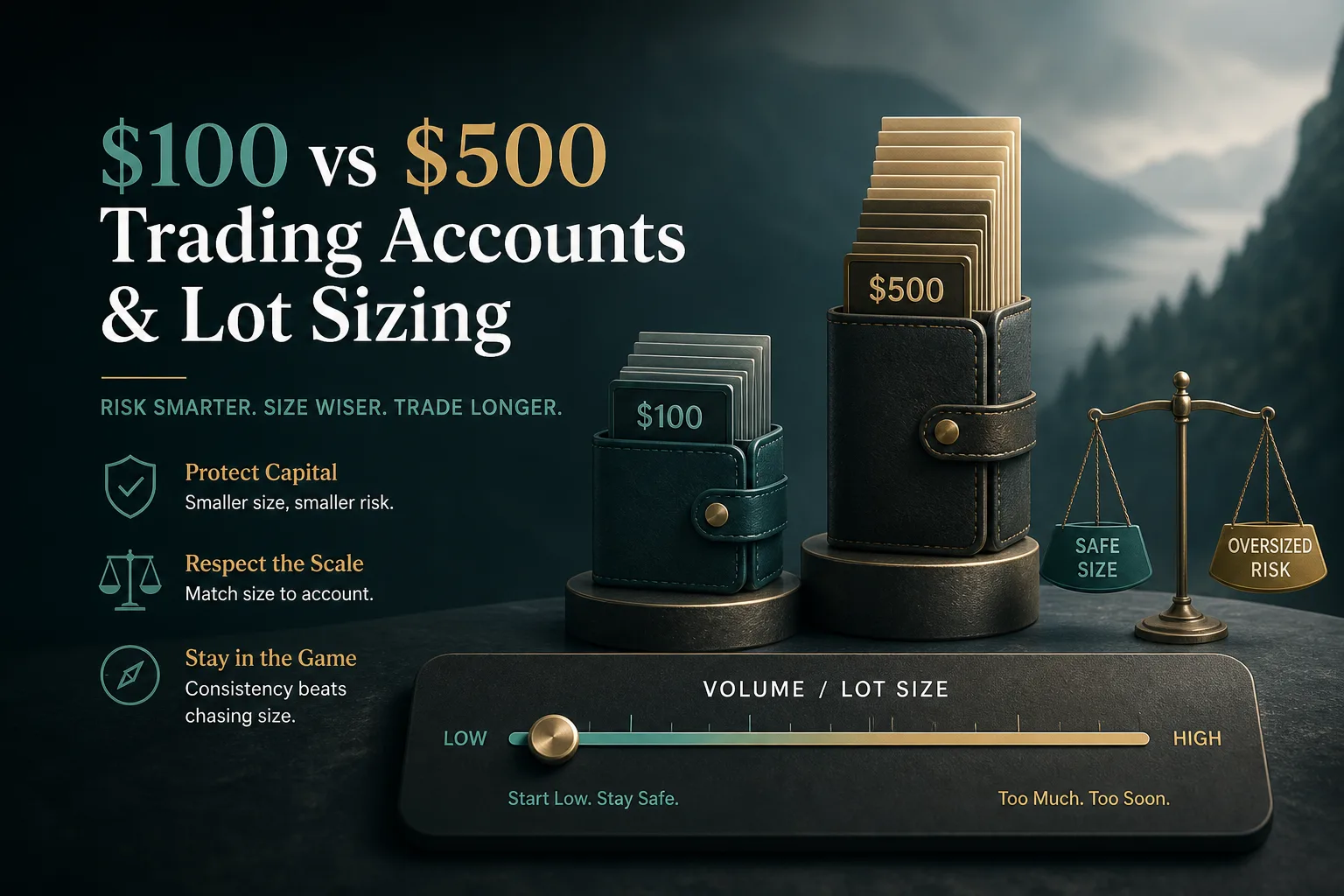
How to choose lot size on $100 and $500 accounts using cash risk and stop distance—safe vs dangerous volume maps for majors and gold, plus a clear pass/fail rule.

Why a 0.01 gold lot is not a ‘safe micro’ trade: point-value logic, stop-distance examples, $100/$500 fit tests and how to use a lot calculator before XAU/USD live orders.
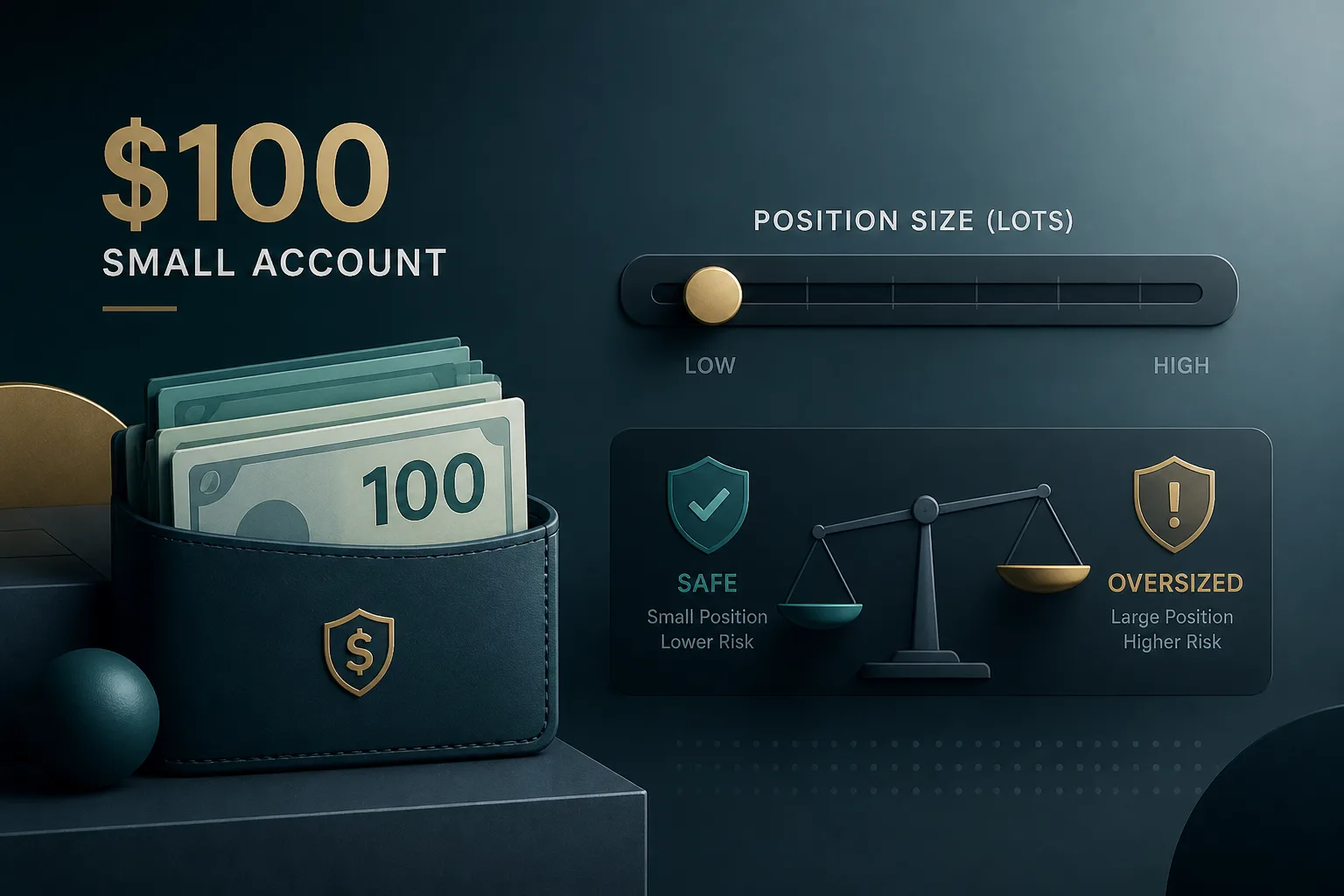
A risk-first answer to how many lots $100 can support on XM: safe micro sizing vs account-blowing volume, EUR/USD and gold examples, margin myths and a clear pass/fail rule.
Run a disciplined first-withdrawal experiment before scaling capital: deposit small, verify KYC and name match, withdraw small, measure timeline and fees, then decide with the Withdrawal Proof Protocol (WPP).

A risk-first, five-input test for deciding whether a planned XM budget can support a specific forex, gold or oil trade—or whether demo only is the honest result.

A broker-agnostic 2026 Gold Capital Fit Test (GCFT) for XAU/USD: $100, $500 and $1,000 scenarios using stop distance, minimum lot, point value and margin buffer—without treating deposit thresholds as safe capital.
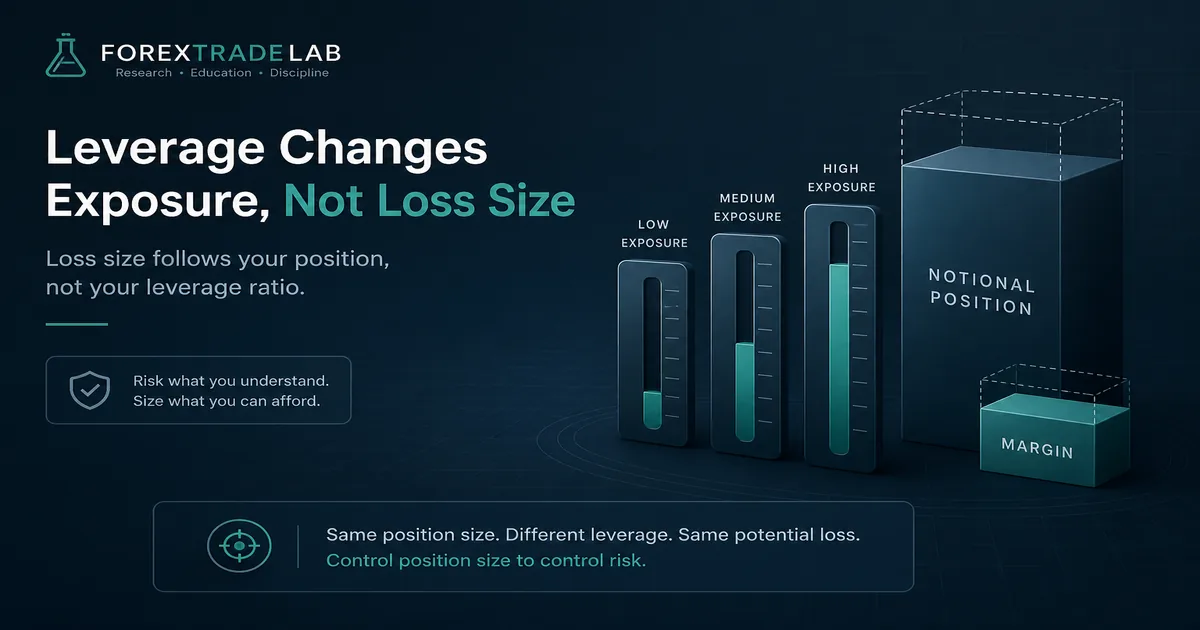
Educational 2026 guide to cash loss at a fixed stop under 1:100, 1:500 and unlimited-style leverage using the Leverage Loss Reality Table (LLRT): margin changes with leverage, but fixed-lot P/L does not — oversized lots do the damage.
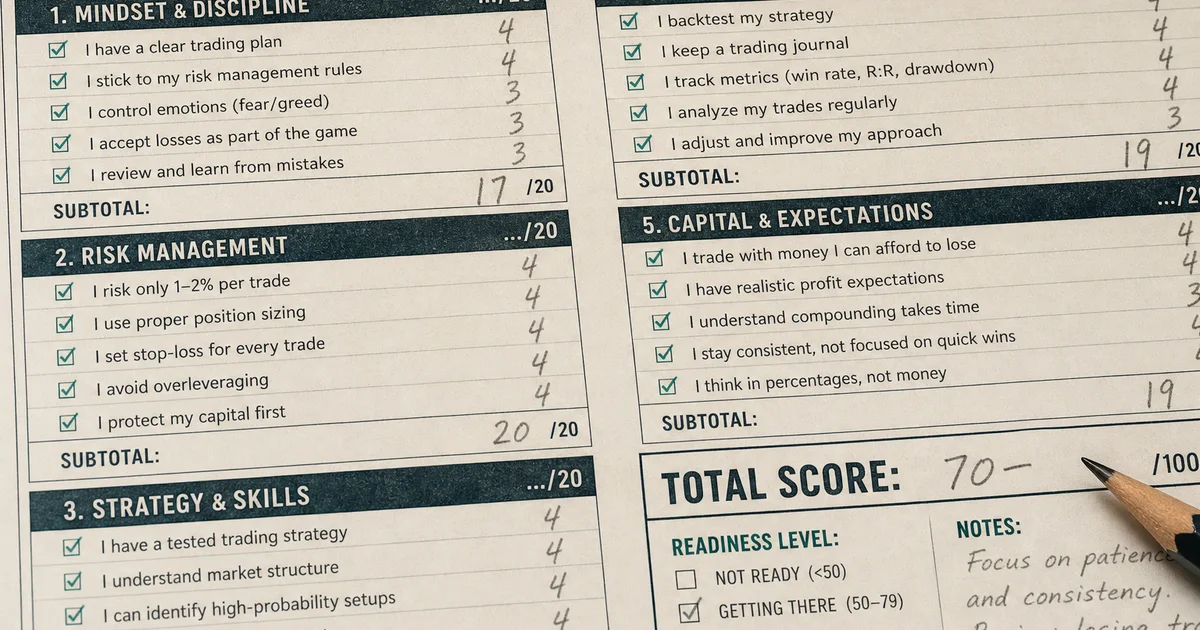
A scored self-assessment for people who intend to start forex trading: capital, time, legality, knowledge, psychology, and goals — with clear bands for wait, demo-only, or consider live funding.

Why $50–$300 forex accounts often lose before strategy quality shows up: spread, commission and minimum lot size create a cost floor that skill cannot erase. When a small account is useful for learning — and when it is just a loss machine.
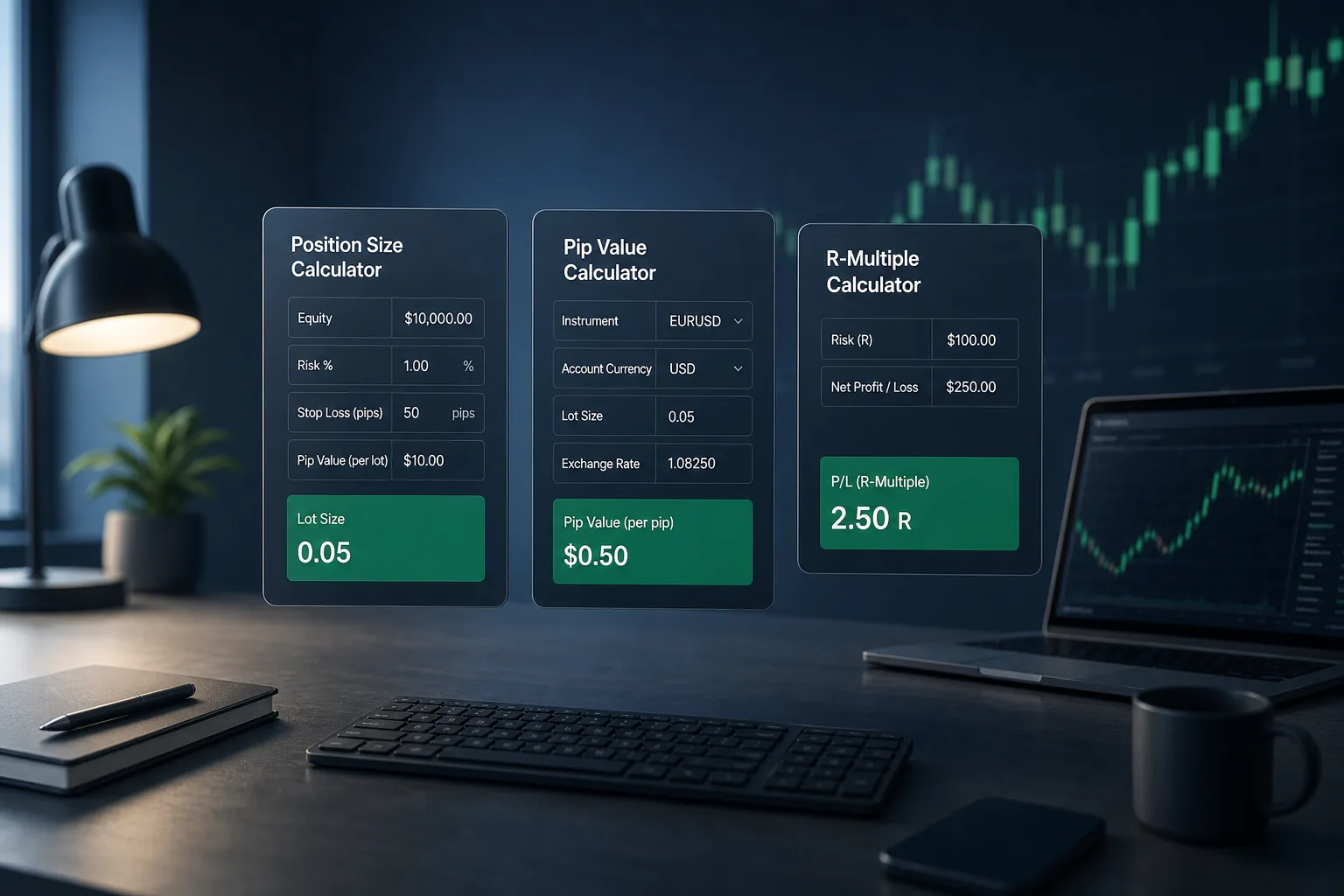
Step-by-step usage guides for ForexTradeLab’s lot size, pip value, and profit/loss calculators — with worked examples, risk rules, and how the three tools fit one trade workflow.

A practical first-demo-trade walkthrough for forex beginners: choose a major pair, define the stop first, calculate position size, place the order, and review the result without treating it as a trading signal.

Build a practical forex risk dashboard before your next trade: position size, stop-loss risk, correlated exposure, daily loss limits and a weekly review—all in one simple spreadsheet workflow.

A practical 2026 checklist for testing a forex broker with a small deposit, verification, one tiny live trade and a withdrawal before adding serious capital.
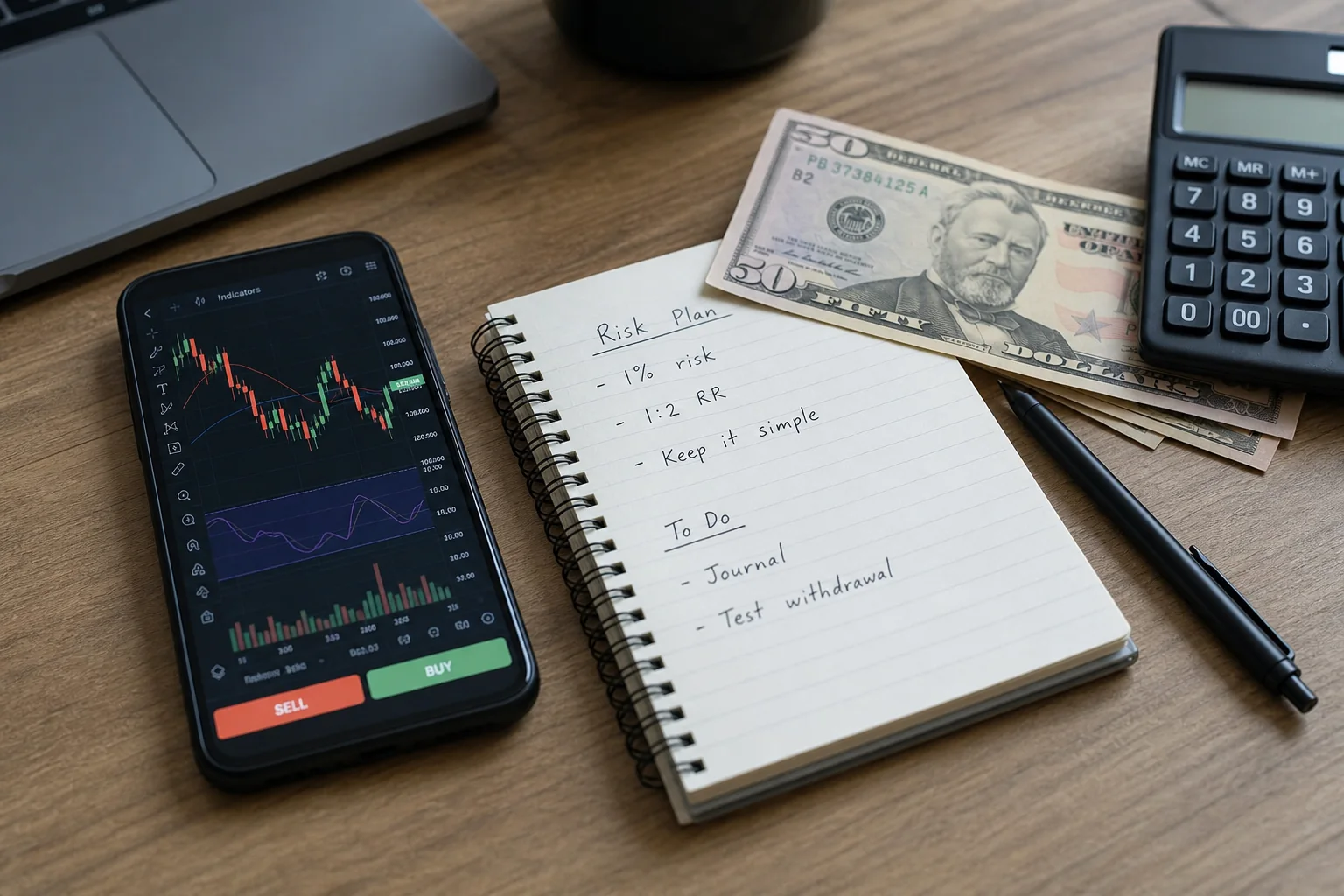
A realistic risk guide for beginners asking whether $50 is enough to trade forex: what a $50 account can and cannot do, risk per trade, XM vs Exness fit and a conservative first-month plan.
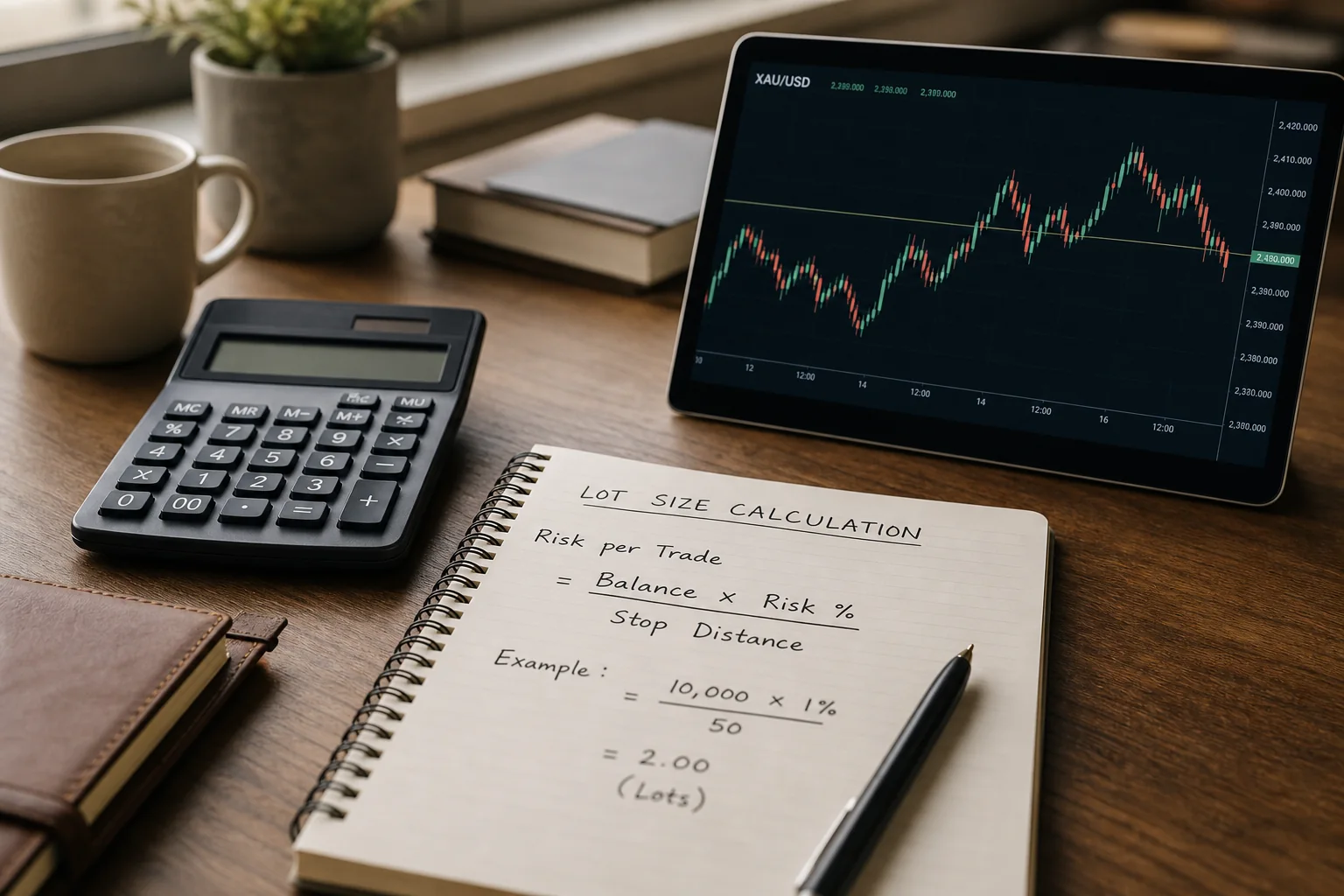
A beginner-friendly guide to calculating gold lot size on XAU/USD: account balance, risk percent, stop distance, contract size differences and why gold position sizing must be checked before every trade.

A step-by-step roadmap for moving from a forex demo account to a small real account, with practical XM and Exness setup choices, risk limits, withdrawal testing and emotional rules.

Exness leverage explained: conditional 1:Unlimited leverage, equity tiers, entity limits, instrument caps, news restrictions and why high leverage is dangerous for beginners.

A beginner-friendly guide explaining what day trading means, how it works, which markets people day trade, the difference from scalping and swing trading, main risks, tools, examples, and when beginners should avoid it.

Pakistan-focused lot size calculator guide: convert PKR risk to USD, choose pip distance, estimate position size and avoid oversized forex trades.