- HFM and XM both use multiple legal entities and regional promotions
- HFM lists Pro, Zero, Cent and HFcopy structures that differ from XM's account range
- Headline leverage is an availability ceiling, not a quality measure
- Swap-free eligibility and possible long-hold charges require written confirmation
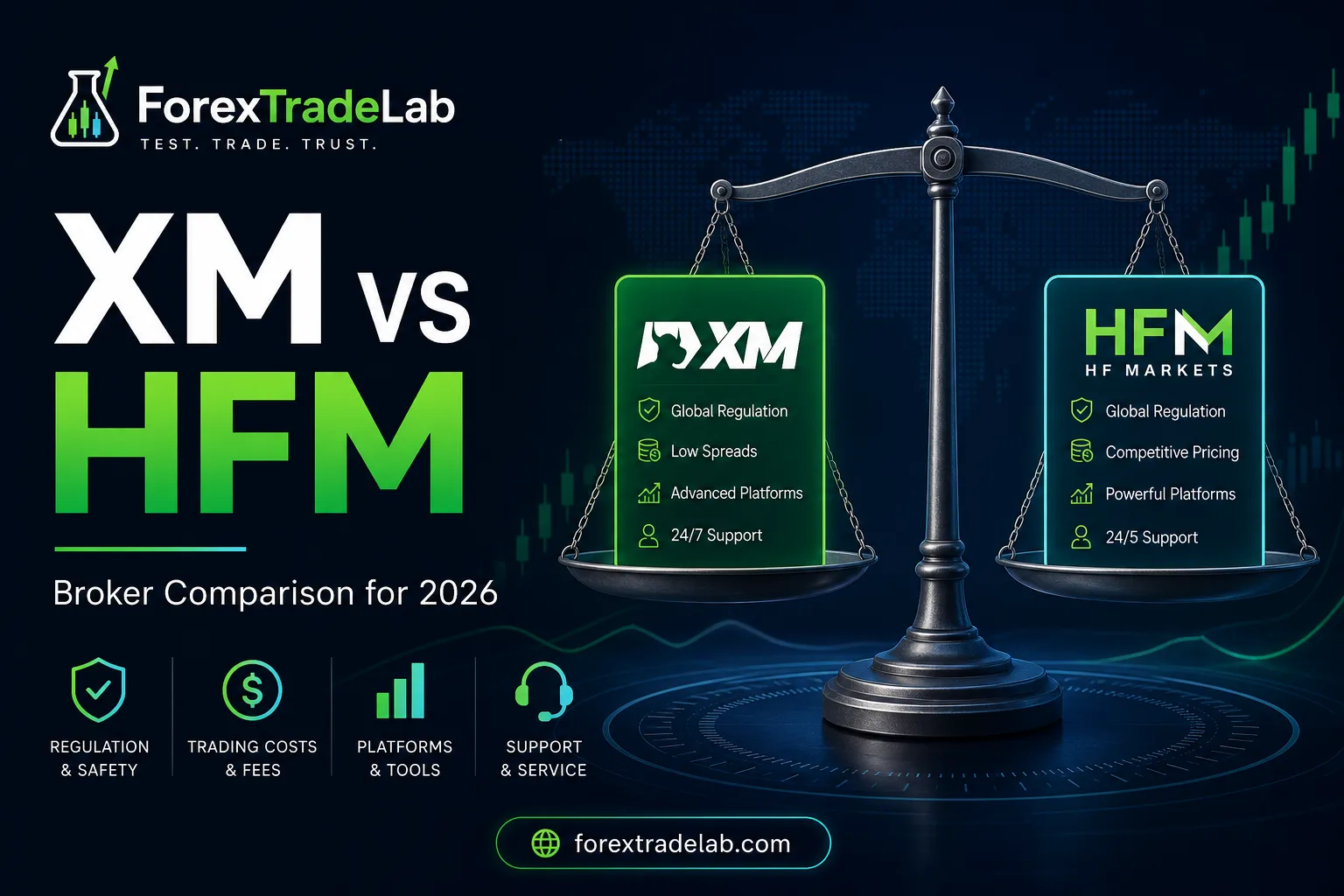
Evidence-based comparison#
Short Answer
Neither XM nor HFM is universally better. Verify the legal entity first, then compare the exact account's total cost, platform, funding route and risk controls.
Detailed Explanation
HFM and XM divide spread-only and commission accounts differently. Compare the specific account, entity and instrument schedule available. Advertised spreads, leverage and processing times are conditional rather than promised outcomes.
Example
For overnight gold, financing and contract size may outweigh a small EUR/USD spread difference. Keep instrument, volume, session and holding period constant.
Common Mistake
Using a major-pair spread table to choose an account intended for metals or longer holds.
Professional Tip
Model total cost on the actual instrument and number of nights, then verify it in the live specification.
Overview#
XM and HFM (formerly HotForex) are both well-established international forex brokers with a strong presence in emerging markets, particularly the Middle East, Africa, and Southeast Asia. Both have been operating for over a decade and serve millions of traders worldwide.
XM was founded in 2009 and offers MetaTrader accounts, educational resources and promotions where eligible; availability depends on country and legal entity.
HFM (HotForex Markets) was founded in 2010 and rebranded to HFM in 2022. HFM is known for its wide range of account types, competitive spreads, and a broad regulatory portfolio spanning multiple jurisdictions.
Quick Comparison Table#
| Feature | XM | HFM |
|---|---|---|
| Founded | 2009 | 2010 |
| Regulation | CySEC, DFSA, FSCA, FSC/FSA, CMA, BVI FSC | CySEC, FCA, DFSA, FSCA, FSC, CMA |
| Min. Deposit | $5 | $0 |
| Spreads (EUR/USD) | From 0.6 pips (Ultra Low) | From 0.0 pips (Zero) |
| Commission | $0 (Standard/Ultra Low) | $3/lot/side (Zero) |
| Max. Leverage | Up to 1:1000* | Up to 1:2000* |
| Platforms | MT4, MT5, XM App, XM WebTrader | MT4, MT5, HFM App |
| Islamic Account | Yes (all account types) | Yes (selected accounts) |
| Bonus | Available in eligible jurisdictions | Regional campaigns |
| Support Languages | 30+ including Arabic | 25+ including Arabic |
| Education | Extensive (webinars, seminars) | Good (videos, articles) |
| Instruments | 1,400+ | 1,000+ |
| Copy Trading | Yes | Yes (HFcopy) |
| Review | XM review | - |
Regulation#
Both XM and HFM are multi-regulated brokers with licenses across several jurisdictions. HFM holds a slightly wider range of licenses, while XM includes valuable DFSA and FSCA regional coverage.
XM's official regulation page lists 8 group licenses:
- CySEC (Cyprus) — License #120/10
- DFSA (Dubai, DIFC) — License #F003484
- FSCA (South Africa) — License #49976
- FSC (Belize) — Licence #8557558
- FSA (Seychelles) — License #SD190
- FSC (Mauritius) — License #GB23202700
- CMA (Kenya) — License #233
- BVI FSC — License #SIBA/L/25/1182
HFM's regulatory licenses:
- CySEC (Cyprus) — License #183/12
- FCA (United Kingdom) — License #801701
- DFSA (Dubai, UAE) — License #F004885
- FSCA (South Africa) — License #46632
- FSC (Mauritius) — License #C110008214
- CMA (Kenya) — License #155
| Aspect | XM | HFM |
|---|---|---|
| Tier 1 Regulator | CySEC | FCA, CySEC |
| EU Regulator | CySEC | CySEC |
| Middle East | DFSA | DFSA |
| Africa | FSCA, CMA (Kenya) | FSCA, CMA |
| Client Fund Segregation | Yes | Yes |
| Negative Balance Protection | Yes | Yes |
| Civil Liability Insurance | — | Up to €5,000,000 |
| Review | XM review | - |
Verdict on regulation: Both are well-regulated. HFM offers FCA coverage and stated civil-liability insurance on eligible entities; XM offers broad emerging-market licensing including DFSA, FSCA, CMA Kenya and BVI FSC entities. Your assigned legal entity matters more than raw license counts — verify entity, compensation scheme and dispute channel before funding.
Spreads and Fees#
Trading costs are where the differences become more tangible. Let's compare the most popular account types.
XM Spreads (typical):
| Account | EUR/USD | GBP/USD | USD/JPY | Gold |
|---|---|---|---|---|
| Standard | 1.6 pips | 2.1 pips | 1.6 pips | 3.5 pips |
| Ultra Low | 0.6 pips | 0.7 pips | 0.7 pips | 1.5 pips |
| XM Zero | 0.0 pips | 0.2 pips | 0.1 pips | 2.0 pips |
XM Zero charges $3.50/lot/side commission.
HFM Spreads (typical):
| Account | EUR/USD | GBP/USD | USD/JPY | Gold |
|---|---|---|---|---|
| Cent | 1.2 pips | 1.8 pips | 1.4 pips | 3.0 pips |
| Premium | 1.2 pips | 1.6 pips | 1.3 pips | 2.8 pips |
| Pro | 0.5 pips | 0.6 pips | 0.5 pips | 1.4 pips |
| Zero | 0.0 pips | 0.2 pips | 0.0 pips | 1.5 pips |
HFM Zero charges $3/lot/side commission. HFM Pro requires $100 minimum deposit and has no commission.
All-in cost comparison (EUR/USD, 1 standard lot round-turn):
HFM's Pro and Zero accounts show a slight cost advantage per trade. However, the practical difference also depends on account eligibility, trading volume and any current promotional terms.
Non-trading fees:
- Deposits/Withdrawals: Both offer free deposits and most withdrawals
- Inactivity fee: XM charges $5/month after 90 days. HFM charges $5/month after 6 months
- Swap rates: Comparable across both brokers; both offer swap-free options
Leverage#
| XM | HFM | |
|---|---|---|
| Maximum leverage | Up to 1:1000* | Up to 1:2000* |
| Default leverage | 1:888 (adjustable) | 1:500 |
| Leverage on Majors | Up to 1:1000* | Up to 1:2000* |
| Leverage on Gold | Up to 1:1000* | Up to 1:2000* |
| Leverage on Crypto | Up to 1:250 | Up to 1:50 |
| Leverage on Stocks | Up to 1:20 | Up to 1:25 |
| Review | XM review | - |
Verdict on leverage: HFM offers higher maximum leverage, but the practical difference is minimal for responsible traders. XM's up-to-1:1000 cap is more than sufficient where eligible.
Account Types#
XM Account Types:
| Account | Min. Deposit | Spread From | Commission | Key Feature |
|---|---|---|---|---|
| Micro | $5 | 1.0 pips | $0 | Micro lots (1,000 units) |
| Standard | $5 | 1.0 pips | $0 | Standard lots |
| Ultra Low | $5 | 0.6 pips | $0 | Low spreads, no commission |
| XM Zero | $100 | 0.0 pips | $3.50/lot/side | Raw spreads |
HFM Account Types:
| Account | Min. Deposit | Spread From | Commission | Key Feature |
|---|---|---|---|---|
| Cent | $0 | 1.2 pips | $0 | Cent lots for micro trading |
| Premium | $0 | 1.2 pips | $0 | Standard trading |
| Pro | $100 | 0.5 pips | $0 | Low spreads, instant execution |
| Zero | $0 | 0.0 pips | $3/lot/side | Raw spreads |
| HFcopy | $100 | 1.0 pips | $0 | Copy trading |
Platforms#
Both brokers rely on the MetaTrader ecosystem and supplement it with proprietary apps.
XM:
- MetaTrader 4 (Desktop, Web, Mobile)
- MetaTrader 5 (Desktop, Web, Mobile)
- XM App (proprietary mobile app)
- XM WebTrader
HFM:
- MetaTrader 4 (Desktop, Web, Mobile)
- MetaTrader 5 (Desktop, Web, Mobile)
- HFM App (proprietary mobile app)
| Feature | XM | HFM |
|---|---|---|
| MT4 | Yes | Yes |
| MT5 | Yes | Yes |
| Proprietary App | XM App, XM WebTrader | HFM App |
| Copy Trading | Yes | Yes (HFcopy) |
| VPS | Free (conditional) | Free (conditional) |
| Autochartist | Yes | Yes |
| Trading Central | No | Yes |
| Review | XM review | - |
Both brokers provide comparable platform experiences. HFM includes Trading Central integration for market analysis, while XM compensates with its extensive webinar program and built-in educational features within its app.
Islamic Accounts#
Both brokers cater to Muslim traders with swap-free account options.
XM Islamic Account:
- Available on all account types (Micro, Standard, Ultra Low, Zero)
- No swap or rollover charges on overnight positions
- No additional fees, markups, or spread widening
- Activated upon request through customer support
- No expiry or time limit on swap-free status
HFM Islamic Account:
- Available on Premium, Pro, and Zero accounts
- No swap charges on overnight positions
- May have specific conditions depending on the instrument
- Activated upon request through customer support
- Conditions may vary by instrument and holding period
Customer Support#
Both publish multilingual support and education, but the response-time and service-quality figures below were not independently benchmarked.
| Aspect | XM | HFM |
|---|---|---|
| Live Chat | 24/5 | 24/5 |
| Yes | Yes | |
| Phone | Yes | Yes |
| Languages | 30+ | 25+ |
| Arabic Support | Dedicated native team | Available |
| Response Time | Under 1 minute (chat) | Under 3 minutes (chat) |
| Personal Account Manager | Yes | Yes (Premium+) |
| Webinars | Regular (multiple languages) | Occasional |
| Seminars | Yes (global events) | Yes (limited regions) |
| Educational Depth | Extensive | Good |
| Review | XM review | - |
XM's support advantages:
- Faster response times in live chat (consistently under 1 minute)
- Larger dedicated Arabic-speaking support team
- Regular live webinars in Arabic covering market analysis and education
- Global seminar program with in-person events
- Over 200 educational videos and comprehensive trading guides
HFM's support strengths:
- Good multilingual support with 25+ languages
- Personal account managers for Premium accounts and above
- Trading Central integration for market research
Final Verdict#
XM and HFM are both reputable, multi-regulated brokers with strong offerings. Here's how to decide between them.
Choose XM if you:
- Value top-tier customer support and fast response times
- Want eligible bonuses to test live markets, subject to terms
- Are a beginner or intermediate trader who benefits from education
- Want access to tight spreads (Ultra Low) with only a $5 deposit
- Trade from the Middle East and want DFSA regulation plus Arabic support
- Prefer eligible promotions and loyalty credits
- Want regular webinars and educational content in your language
Choose HFM if you:
- Prioritize the broadest possible regulatory coverage (6 licenses)
- Need maximum leverage of 1:2000
- Want Trading Central integration for market analysis
- Prefer the HFcopy system for social trading
- Need a dedicated Cent account for ultra-small position sizing
Overall: Neither broker is an all-around winner. HFM may fit a trader who needs its Pro, Zero, Cent, HFcopy or Trading Central setup; XM may fit a trader whose available MetaTrader account and education format match the plan. Verify the assigned entity and compare live all-in cost before choosing.
Affiliate & risk disclosure: ForexTradeLab may earn commissions from qualifying broker links. This does not affect the comparison method or make any broker suitable for you. Leveraged forex and CFDs can cause rapid losses. Read the affiliate disclosure and risk disclaimer.