- Understand mechanics before risking money
- Set clear cash limits
- Review costs and terms
- No outcome is guaranteed
 Regulated Global Broker
 Trusted by 20M+ traders — open your account in minutes
- Trade 1,400+ instruments
- Country-based bonus offers where eligible
- MT4 & MT5 available
- Easy deposits and withdrawals
- Leverage up to 1000:1, where available
- Copy Trading: auto-copy expert strategy managers
- Copy trading: direct answer
- Introduction
- What Copy Trading Replicates
- Copy Trading, Social Trading, and Managed Accounts
- Return Is Not a Risk Metric
- Maximum Drawdown and Recovery
- Allocation and Risk Multipliers
- Execution Differences and Slippage
- Costs, Fees, and Financing
- Diversification Requires Different Risks
- Monitoring and Stop Rules
- A Careful Start Process
- Pre-Trade Checklist
- Conclusion
Copy trading: direct answer#
Short Answer
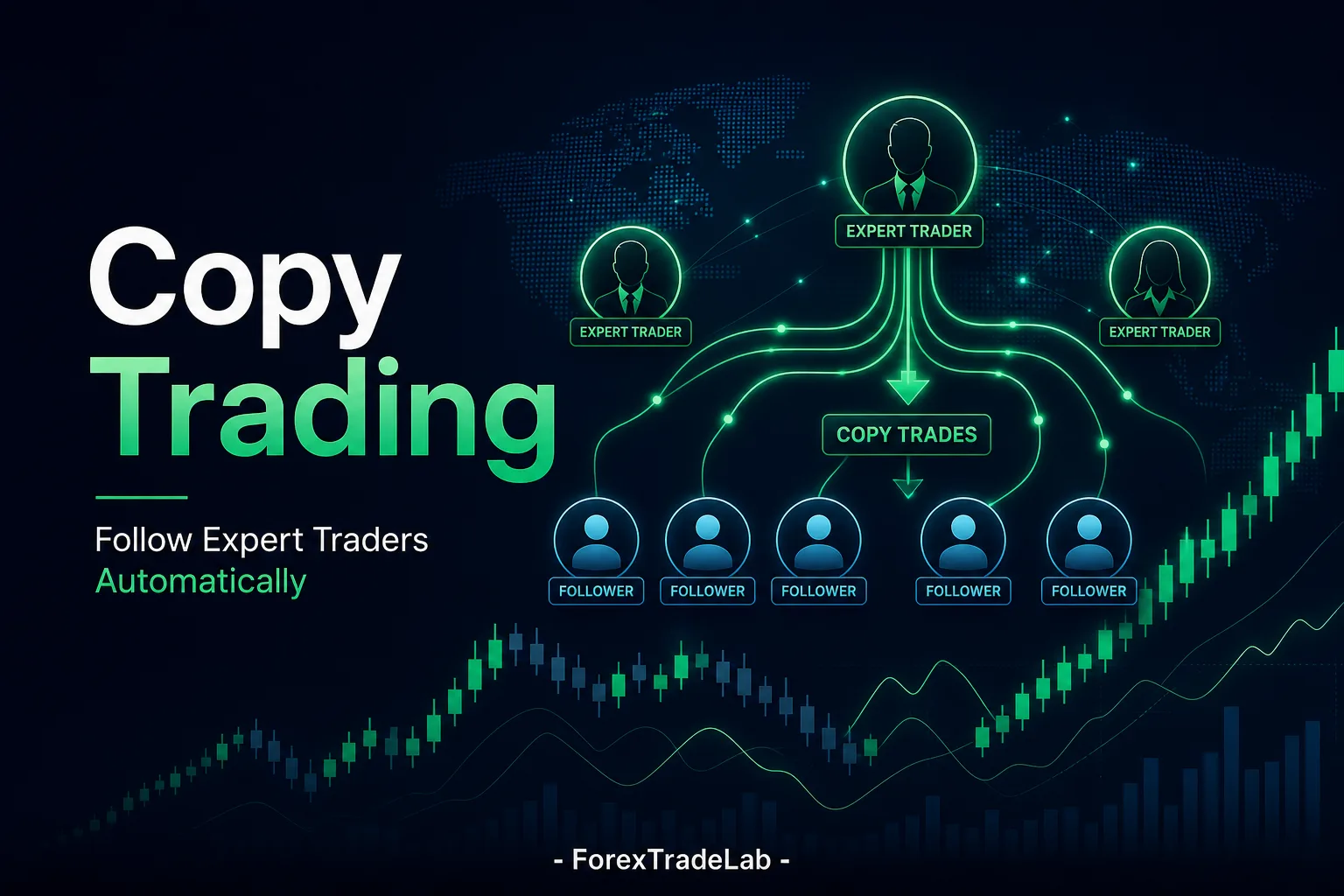
Copy trading replicates another account's orders, not its judgment or future results; the follower still controls allocation, limits and exit.
Detailed Explanation
Follower prices can differ because of latency, minimum volume and account terms. Provider return without drawdown, open risk and costs is incomplete evidence.
Example
A provider opening 0.10 lot may be rounded differently in a small follower account, changing both risk and performance.
Common Mistake
Choosing the highest recent return while ignoring leverage, concentration and unclosed losses.
Professional Tip
Set a cash allocation and drawdown stop before copying, then monitor provider behavior and execution differences.
Introduction#
Short Answer
Copy trading automates the replication of another trader's orders, but it does not automate judgement. You still choose the provider, allocation, risk multiplier, platform, and point at which copying stops. Those decisions can determine more of the outcome than the provider's latest return.
What Copy Trading Replicates#
Short Answer
A copy system links a follower account to a strategy provider and attempts to reproduce openings, closures, and sometimes modifications according to allocation rules. The result may be proportional rather than identical because account sizes, minimum volumes, prices, leverage, and timing differ.
Detailed Explanation
A copy system links a follower account to a strategy provider and attempts to reproduce openings, closures, and sometimes modifications according to allocation rules. The result may be proportional rather than identical because account sizes, minimum volumes, prices, leverage, and timing differ. Copying a position is not copying a complete decision process. The follower may not know the provider's broader portfolio, unclosed losses, or reasons for a trade.
Example
Copying a position is not copying a complete decision process. The follower may not know the provider's broader portfolio, unclosed losses, or reasons for a trade.
Copy Trading, Social Trading, and Managed Accounts#
Short Answer
Social trading can mean viewing ideas or performance. Copy trading means automatic replication. A managed account gives another party discretionary control under a different legal arrangement. These labels should not be treated as interchangeable.
Detailed Explanation
Social trading can mean viewing ideas or performance. Copy trading means automatic replication. A managed account gives another party discretionary control under a different legal arrangement. These labels should not be treated as interchangeable. Read the platform's legal terms to establish who is responsible for execution, how performance is calculated, and whether the service is available and regulated in your residence.
Example
Read the platform's legal terms to establish who is responsible for execution, how performance is calculated, and whether the service is available and regulated in your residence.
Return Is Not a Risk Metric#
Short Answer
A high short-term return can be produced by high leverage, concentration, averaging down, or a small sample. It says little without maximum drawdown, duration, trade count, distribution of gains and losses, and open-position risk.
Detailed Explanation
A high short-term return can be produced by high leverage, concentration, averaging down, or a small sample. It says little without maximum drawdown, duration, trade count, distribution of gains and losses, and open-position risk. Look for consistency across different market conditions, but remember that historical data cannot prove future performance. A smooth equity curve can still conceal risk if it ignores floating losses.
Example
Look for consistency across different market conditions, but remember that historical data cannot prove future performance. A smooth equity curve can still conceal risk if it ignores floating losses.
Maximum Drawdown and Recovery#
Short Answer
Maximum drawdown is the largest peak-to-trough decline in the reported period. It is one of the clearest descriptions of what a follower might have had to tolerate, though future drawdowns can be worse.
Detailed Explanation
Maximum drawdown is the largest peak-to-trough decline in the reported period. It is one of the clearest descriptions of what a follower might have had to tolerate, though future drawdowns can be worse. A strategy down 30 percent needs roughly 43 percent to recover. Decide in advance whether that loss is acceptable and whether the platform's stated drawdown includes open losses, fees, and all accounts.
Example
A strategy down 30 percent needs roughly 43 percent to recover. Decide in advance whether that loss is acceptable and whether the platform's stated drawdown includes open losses, fees, and all accounts.
Allocation and Risk Multipliers#
Short Answer
Allocation determines how much of your capital follows a provider. A multiplier can magnify or reduce copied volume, but it can also create sizing distortions when instruments, minimum volumes, or leverage differ.
Detailed Explanation
Allocation determines how much of your capital follows a provider. A multiplier can magnify or reduce copied volume, but it can also create sizing distortions when instruments, minimum volumes, or leverage differ. Start with an allocation whose total loss would be manageable if the provider experiences a historically severe drawdown. Do not set a multiplier by copying the provider's percentage return target.
Example
Start with an allocation whose total loss would be manageable if the provider experiences a historically severe drawdown. Do not set a multiplier by copying the provider's percentage return target.
Execution Differences and Slippage#
Short Answer
Even when copying is automatic, followers can receive different prices because of latency, liquidity, account type, symbol mapping, and minimum-order rounding. Short-term strategies can be particularly sensitive to these gaps.
Detailed Explanation
Even when copying is automatic, followers can receive different prices because of latency, liquidity, account type, symbol mapping, and minimum-order rounding. Short-term strategies can be particularly sensitive to these gaps. Review whether the platform reports follower performance separately and whether historical results are provider-only or follower-realised. A strategy that depends on tiny price differences may not be portable.
Example
Review whether the platform reports follower performance separately and whether historical results are provider-only or follower-realised. A strategy that depends on tiny price differences may not be portable.
Costs, Fees, and Financing#
Short Answer
Copying may involve performance fees, management fees, subscription charges, spread, commission, conversion, and overnight financing. A profitable gross strategy can be unprofitable after fees for the follower.
Detailed Explanation
Copying may involve performance fees, management fees, subscription charges, spread, commission, conversion, and overnight financing. A profitable gross strategy can be unprofitable after fees for the follower. Read fee calculations carefully: high-water marks, crystallisation dates, loss recovery, withdrawal effects, and whether fees are charged on realised or unrealised profit all change the result.
Example
Read fee calculations carefully: high-water marks, crystallisation dates, loss recovery, withdrawal effects, and whether fees are charged on realised or unrealised profit all change the result.
Diversification Requires Different Risks#
Short Answer
Following several providers does not automatically diversify. They may all buy the same currency, use the same indicator, increase size after losses, or react similarly to macro news.
Detailed Explanation
Following several providers does not automatically diversify. They may all buy the same currency, use the same indicator, increase size after losses, or react similarly to macro news. Review holdings and methods, not provider names. Set a portfolio-level loss limit and include correlations with your own manual positions.
Example
Review holdings and methods, not provider names. Set a portfolio-level loss limit and include correlations with your own manual positions.
Monitoring and Stop Rules#
Short Answer
Copy trading is not set-and-forget. Monitor drawdown, changes in provider behaviour, leverage, instruments, provider capital, and communication. Decide what would cause you to reduce allocation or stop copying before pressure appears.
Detailed Explanation
Copy trading is not set-and-forget. Monitor drawdown, changes in provider behaviour, leverage, instruments, provider capital, and communication. Decide what would cause you to reduce allocation or stop copying before pressure appears. A sensible stop rule can be based on a change in method, breach of a risk limit, unexplained execution changes, or loss beyond the allocation plan—not simply a few normal losing trades.
Example
A sensible stop rule can be based on a change in method, breach of a risk limit, unexplained execution changes, or loss beyond the allocation plan—not simply a few normal losing trades.
A Careful Start Process#
Short Answer
Learn basic forex mechanics and risk management first. Read platform terms, screen providers for risk and duration, allocate a deliberately small amount, record fees and fills, then review results over a meaningful sample.
Detailed Explanation
Learn basic forex mechanics and risk management first. Read platform terms, screen providers for risk and duration, allocate a deliberately small amount, record fees and fills, then review results over a meaningful sample. Copy trading can be an educational observation tool, but it is not a substitute for suitability assessment or an income plan. You remain responsible for each loss in your account.
Example
Copy trading can be an educational observation tool, but it is not a substitute for suitability assessment or an income plan. You remain responsible for each loss in your account.
Pre-Trade Checklist#
- Understand the product, legal entity, and its terms.
- Define the maximum cash loss before entry.
- Check spread, commission, financing, and possible slippage.
- Review total exposure and correlations.
- Accept that no trade is a valid decision when conditions are absent.
Conclusion#
Disciplined understanding of mechanics, costs, and risk matters more than any promise of quick returns. Use this guide as a starting point, verify official terms, and keep cash limits that you can actually follow.
Further Perspective: What Copy Trading Replicates#
A copy system links a follower account to a strategy provider and attempts to reproduce openings, closures, and sometimes modifications according to allocation rules. The result may be proportional rather than identical because account sizes, minimum volumes, prices, leverage, and timing differ. Copying a position is not copying a complete decision process. The follower may not know the provider's broader portfolio, unclosed losses, or reasons for a trade. Do not treat this as a universal rule detached from your circumstances; connect it to account size, costs, broker terms, and the risk plan. Calm comparison of scenarios before execution protects against impulsive decisions.
Further Perspective: Copy Trading, Social Trading, and Managed Accounts#
Social trading can mean viewing ideas or performance. Copy trading means automatic replication. A managed account gives another party discretionary control under a different legal arrangement. These labels should not be treated as interchangeable. Read the platform's legal terms to establish who is responsible for execution, how performance is calculated, and whether the service is available and regulated in your residence. Do not treat this as a universal rule detached from your circumstances; connect it to account size, costs, broker terms, and the risk plan. Calm comparison of scenarios before execution protects against impulsive decisions.
Further Perspective: Return Is Not a Risk Metric#
A high short-term return can be produced by high leverage, concentration, averaging down, or a small sample. It says little without maximum drawdown, duration, trade count, distribution of gains and losses, and open-position risk. Look for consistency across different market conditions, but remember that historical data cannot prove future performance. A smooth equity curve can still conceal risk if it ignores floating losses. Do not treat this as a universal rule detached from your circumstances; connect it to account size, costs, broker terms, and the risk plan. Calm comparison of scenarios before execution protects against impulsive decisions.
Further Perspective: Maximum Drawdown and Recovery#
Maximum drawdown is the largest peak-to-trough decline in the reported period. It is one of the clearest descriptions of what a follower might have had to tolerate, though future drawdowns can be worse. A strategy down 30 percent needs roughly 43 percent to recover. Decide in advance whether that loss is acceptable and whether the platform's stated drawdown includes open losses, fees, and all accounts. Do not treat this as a universal rule detached from your circumstances; connect it to account size, costs, broker terms, and the risk plan. Calm comparison of scenarios before execution protects against impulsive decisions.
Further Perspective: Allocation and Risk Multipliers#
Allocation determines how much of your capital follows a provider. A multiplier can magnify or reduce copied volume, but it can also create sizing distortions when instruments, minimum volumes, or leverage differ. Start with an allocation whose total loss would be manageable if the provider experiences a historically severe drawdown. Do not set a multiplier by copying the provider's percentage return target. Do not treat this as a universal rule detached from your circumstances; connect it to account size, costs, broker terms, and the risk plan. Calm comparison of scenarios before execution protects against impulsive decisions.
Further Perspective: Execution Differences and Slippage#
Even when copying is automatic, followers can receive different prices because of latency, liquidity, account type, symbol mapping, and minimum-order rounding. Short-term strategies can be particularly sensitive to these gaps. Review whether the platform reports follower performance separately and whether historical results are provider-only or follower-realised. A strategy that depends on tiny price differences may not be portable. Do not treat this as a universal rule detached from your circumstances; connect it to account size, costs, broker terms, and the risk plan. Calm comparison of scenarios before execution protects against impulsive decisions.
Further Perspective: Costs, Fees, and Financing#
Copying may involve performance fees, management fees, subscription charges, spread, commission, conversion, and overnight financing. A profitable gross strategy can be unprofitable after fees for the follower. Read fee calculations carefully: high-water marks, crystallisation dates, loss recovery, withdrawal effects, and whether fees are charged on realised or unrealised profit all change the result. Do not treat this as a universal rule detached from your circumstances; connect it to account size, costs, broker terms, and the risk plan. Calm comparison of scenarios before execution protects against impulsive decisions.
Further Perspective: Diversification Requires Different Risks#
Following several providers does not automatically diversify. They may all buy the same currency, use the same indicator, increase size after losses, or react similarly to macro news. Review holdings and methods, not provider names. Set a portfolio-level loss limit and include correlations with your own manual positions. Do not treat this as a universal rule detached from your circumstances; connect it to account size, costs, broker terms, and the risk plan. Calm comparison of scenarios before execution protects against impulsive decisions.
Further Perspective: Monitoring and Stop Rules#
Copy trading is not set-and-forget. Monitor drawdown, changes in provider behaviour, leverage, instruments, provider capital, and communication. Decide what would cause you to reduce allocation or stop copying before pressure appears. A sensible stop rule can be based on a change in method, breach of a risk limit, unexplained execution changes, or loss beyond the allocation plan—not simply a few normal losing trades. Do not treat this as a universal rule detached from your circumstances; connect it to account size, costs, broker terms, and the risk plan. Calm comparison of scenarios before execution protects against impulsive decisions.
Further Perspective: A Careful Start Process#
Learn basic forex mechanics and risk management first. Read platform terms, screen providers for risk and duration, allocate a deliberately small amount, record fees and fills, then review results over a meaningful sample. Copy trading can be an educational observation tool, but it is not a substitute for suitability assessment or an income plan. You remain responsible for each loss in your account. Do not treat this as a universal rule detached from your circumstances; connect it to account size, costs, broker terms, and the risk plan. Calm comparison of scenarios before execution protects against impulsive decisions.
Further Perspective: What Copy Trading Replicates#
A copy system links a follower account to a strategy provider and attempts to reproduce openings, closures, and sometimes modifications according to allocation rules. The result may be proportional rather than identical because account sizes, minimum volumes, prices, leverage, and timing differ. Copying a position is not copying a complete decision process. The follower may not know the provider's broader portfolio, unclosed losses, or reasons for a trade. Do not treat this as a universal rule detached from your circumstances; connect it to account size, costs, broker terms, and the risk plan. Calm comparison of scenarios before execution protects against impulsive decisions.
Further Perspective: Copy Trading, Social Trading, and Managed Accounts#
Social trading can mean viewing ideas or performance. Copy trading means automatic replication. A managed account gives another party discretionary control under a different legal arrangement. These labels should not be treated as interchangeable. Read the platform's legal terms to establish who is responsible for execution, how performance is calculated, and whether the service is available and regulated in your residence. Do not treat this as a universal rule detached from your circumstances; connect it to account size, costs, broker terms, and the risk plan. Calm comparison of scenarios before execution protects against impulsive decisions.
Further Perspective: Return Is Not a Risk Metric#
A high short-term return can be produced by high leverage, concentration, averaging down, or a small sample. It says little without maximum drawdown, duration, trade count, distribution of gains and losses, and open-position risk. Look for consistency across different market conditions, but remember that historical data cannot prove future performance. A smooth equity curve can still conceal risk if it ignores floating losses. Do not treat this as a universal rule detached from your circumstances; connect it to account size, costs, broker terms, and the risk plan. Calm comparison of scenarios before execution protects against impulsive decisions.
Further Perspective: Maximum Drawdown and Recovery#
Maximum drawdown is the largest peak-to-trough decline in the reported period. It is one of the clearest descriptions of what a follower might have had to tolerate, though future drawdowns can be worse. A strategy down 30 percent needs roughly 43 percent to recover. Decide in advance whether that loss is acceptable and whether the platform's stated drawdown includes open losses, fees, and all accounts. Do not treat this as a universal rule detached from your circumstances; connect it to account size, costs, broker terms, and the risk plan. Calm comparison of scenarios before execution protects against impulsive decisions.
Further Perspective: Allocation and Risk Multipliers#
Allocation determines how much of your capital follows a provider. A multiplier can magnify or reduce copied volume, but it can also create sizing distortions when instruments, minimum volumes, or leverage differ. Start with an allocation whose total loss would be manageable if the provider experiences a historically severe drawdown. Do not set a multiplier by copying the provider's percentage return target. Do not treat this as a universal rule detached from your circumstances; connect it to account size, costs, broker terms, and the risk plan. Calm comparison of scenarios before execution protects against impulsive decisions.
Further Perspective: Execution Differences and Slippage#
Even when copying is automatic, followers can receive different prices because of latency, liquidity, account type, symbol mapping, and minimum-order rounding. Short-term strategies can be particularly sensitive to these gaps. Review whether the platform reports follower performance separately and whether historical results are provider-only or follower-realised. A strategy that depends on tiny price differences may not be portable. Do not treat this as a universal rule detached from your circumstances; connect it to account size, costs, broker terms, and the risk plan. Calm comparison of scenarios before execution protects against impulsive decisions.
Further Perspective: Costs, Fees, and Financing#
Copying may involve performance fees, management fees, subscription charges, spread, commission, conversion, and overnight financing. A profitable gross strategy can be unprofitable after fees for the follower. Read fee calculations carefully: high-water marks, crystallisation dates, loss recovery, withdrawal effects, and whether fees are charged on realised or unrealised profit all change the result. Do not treat this as a universal rule detached from your circumstances; connect it to account size, costs, broker terms, and the risk plan. Calm comparison of scenarios before execution protects against impulsive decisions.
Further Perspective: Diversification Requires Different Risks#
Following several providers does not automatically diversify. They may all buy the same currency, use the same indicator, increase size after losses, or react similarly to macro news. Review holdings and methods, not provider names. Set a portfolio-level loss limit and include correlations with your own manual positions. Do not treat this as a universal rule detached from your circumstances; connect it to account size, costs, broker terms, and the risk plan. Calm comparison of scenarios before execution protects against impulsive decisions.
Further Perspective: Monitoring and Stop Rules#
Copy trading is not set-and-forget. Monitor drawdown, changes in provider behaviour, leverage, instruments, provider capital, and communication. Decide what would cause you to reduce allocation or stop copying before pressure appears. A sensible stop rule can be based on a change in method, breach of a risk limit, unexplained execution changes, or loss beyond the allocation plan—not simply a few normal losing trades. Do not treat this as a universal rule detached from your circumstances; connect it to account size, costs, broker terms, and the risk plan. Calm comparison of scenarios before execution protects against impulsive decisions.
Further Perspective: A Careful Start Process#
Learn basic forex mechanics and risk management first. Read platform terms, screen providers for risk and duration, allocate a deliberately small amount, record fees and fills, then review results over a meaningful sample. Copy trading can be an educational observation tool, but it is not a substitute for suitability assessment or an income plan. You remain responsible for each loss in your account. Do not treat this as a universal rule detached from your circumstances; connect it to account size, costs, broker terms, and the risk plan. Calm comparison of scenarios before execution protects against impulsive decisions.
Further Perspective: What Copy Trading Replicates#
A copy system links a follower account to a strategy provider and attempts to reproduce openings, closures, and sometimes modifications according to allocation rules. The result may be proportional rather than identical because account sizes, minimum volumes, prices, leverage, and timing differ. Copying a position is not copying a complete decision process. The follower may not know the provider's broader portfolio, unclosed losses, or reasons for a trade. Do not treat this as a universal rule detached from your circumstances; connect it to account size, costs, broker terms, and the risk plan. Calm comparison of scenarios before execution protects against impulsive decisions.
Further Perspective: Copy Trading, Social Trading, and Managed Accounts#
Social trading can mean viewing ideas or performance. Copy trading means automatic replication. A managed account gives another party discretionary control under a different legal arrangement. These labels should not be treated as interchangeable. Read the platform's legal terms to establish who is responsible for execution, how performance is calculated, and whether the service is available and regulated in your residence. Do not treat this as a universal rule detached from your circumstances; connect it to account size, costs, broker terms, and the risk plan. Calm comparison of scenarios before execution protects against impulsive decisions.