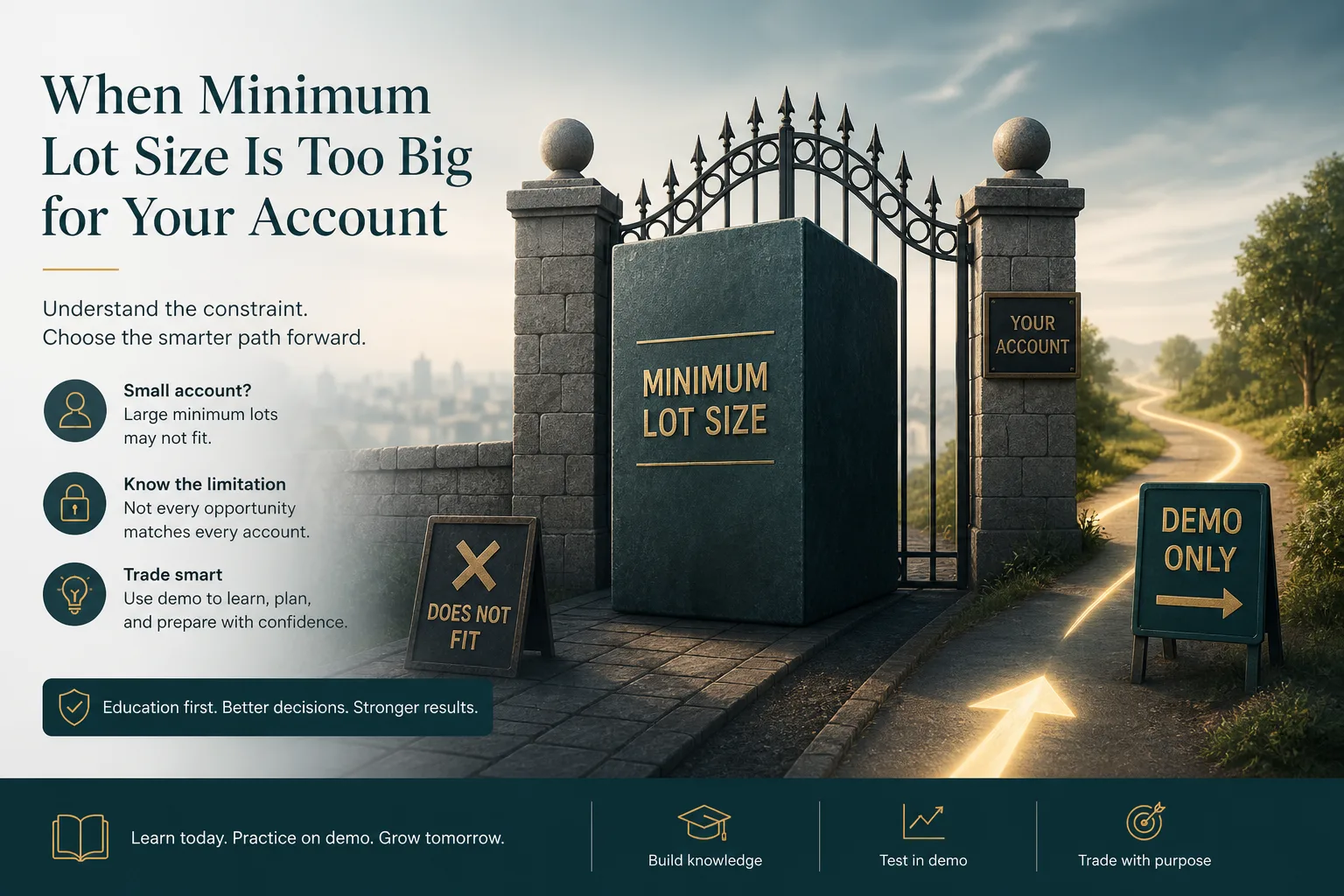
When the Minimum Lot Is Too Big for Your Account
What to do when your broker’s minimum lot already risks more than your 0.5%–1% cash cap: the honest demo-only decision, worked $50–$500 examples, and how not to ‘fix’ the trade.
Topic archive
Short answer: page 3 of the Beginners archive lists 24 earlier ForexTradeLab articles from May 2026 – Jul 2026.
Newest first · Page 3 / 4
What to do when your broker’s minimum lot already risks more than your 0.5%–1% cash cap: the honest demo-only decision, worked $50–$500 examples, and how not to ‘fix’ the trade.
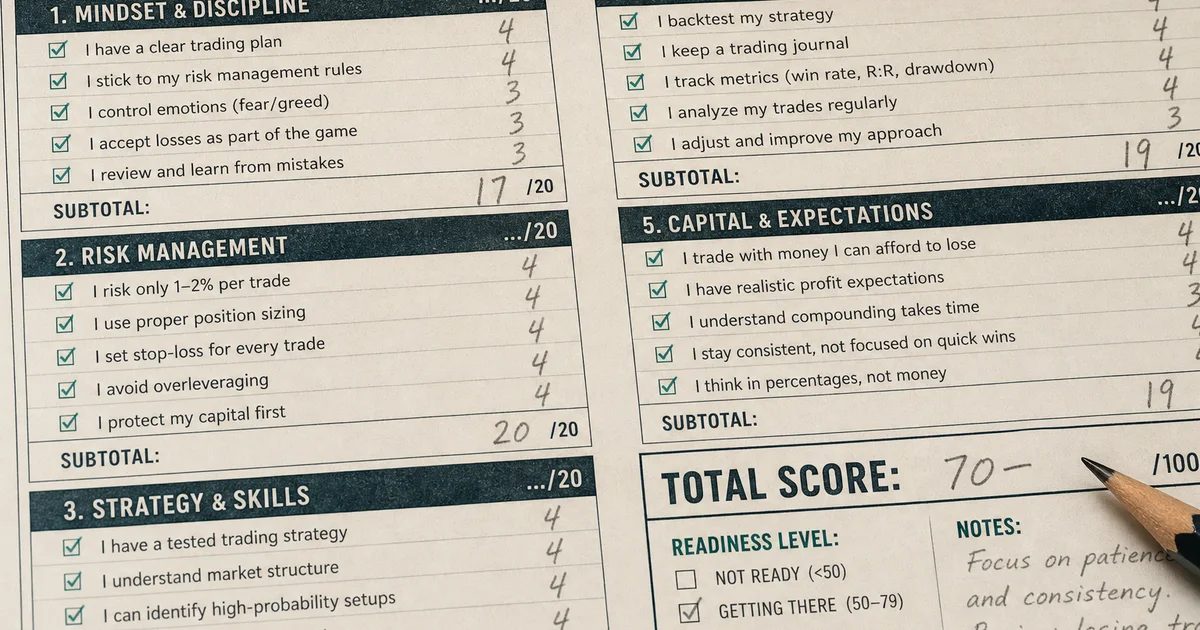
A scored self-assessment for people who intend to start forex trading: capital, time, legality, knowledge, psychology, and goals — with clear bands for wait, demo-only, or consider live funding.
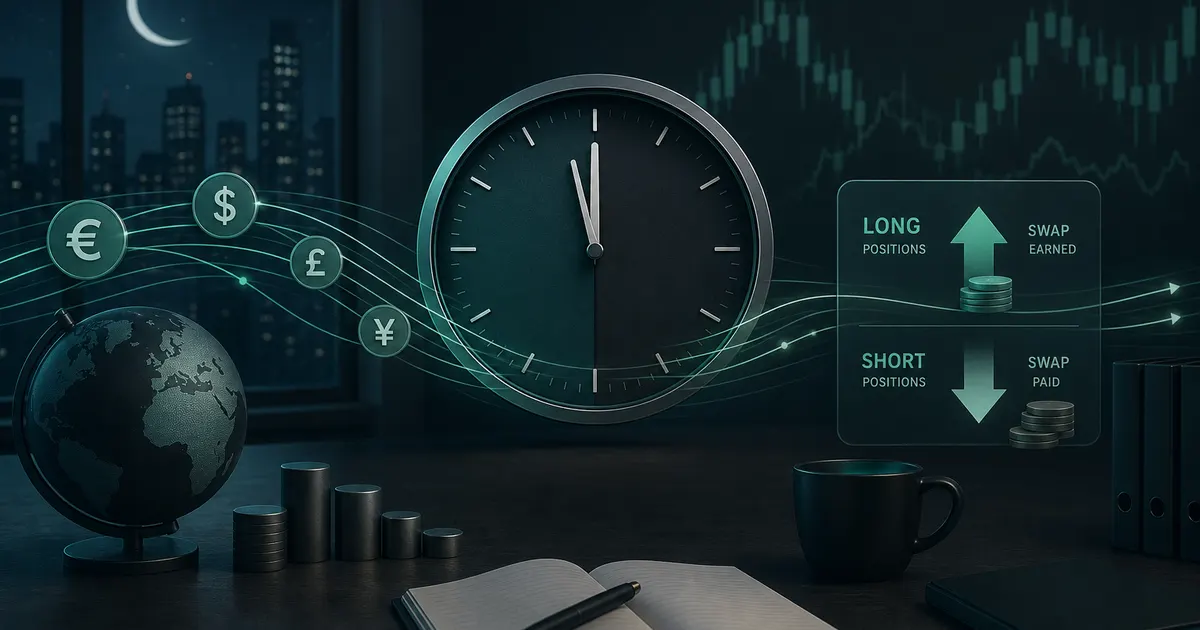
A clear 2026 explanation of forex swap (rollover / overnight financing): why positions held past the broker’s cutoff earn or pay interest, how long vs short swaps work, triple-swap Wednesdays, what the platform numbers mean, and when swap-free accounts change the cost structure.
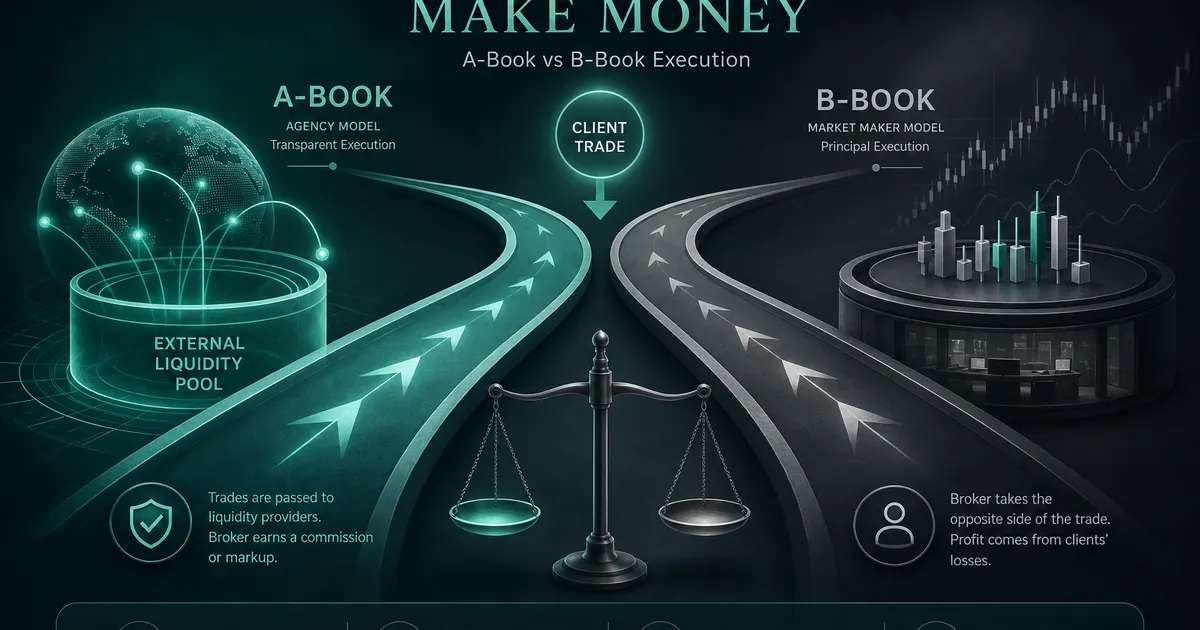
A practical 2026 guide to how retail forex brokers earn: spread and commission, A-book (agency) vs B-Book (market-maker) execution, hybrid desks, swap and financing, and the conflict-of-interest checks every trader should run before depositing.
The same broker logo can mean different legal entities, regulators and client protections. A practical 7-item checklist for country redirects, client agreements, licence numbers and negative balance wording — before you deposit.
Why $50–$300 forex accounts often lose before strategy quality shows up: spread, commission and minimum lot size create a cost floor that skill cannot erase. When a small account is useful for learning — and when it is just a loss machine.
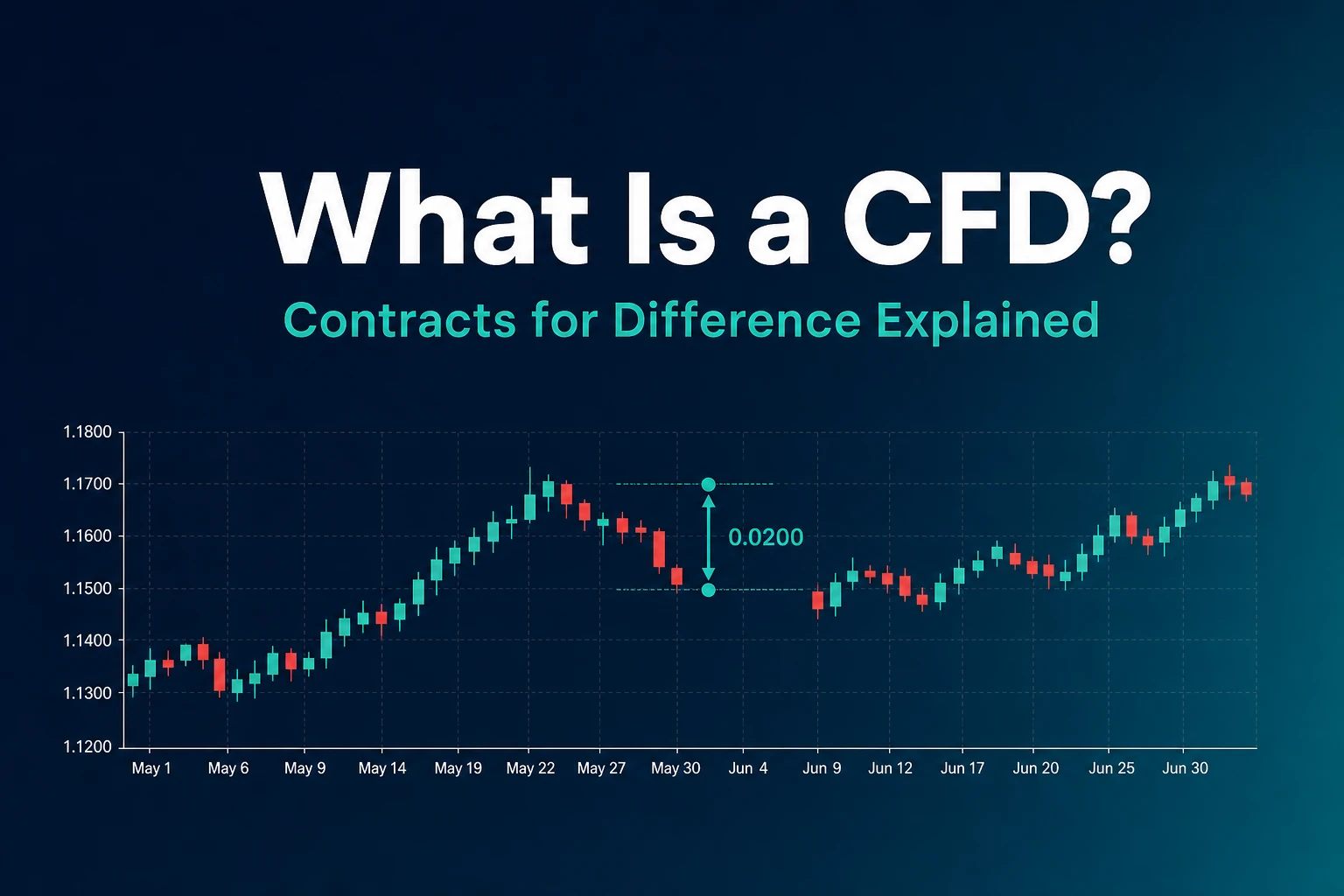
A complete 2026 guide to CFDs: what a contract for difference is, how P&L is calculated, CFD vs forex vs owning the asset, leverage and margin mechanics, costs, regulation caveats, and a practical checklist before you trade.
A practical pre-deposit checklist for testing forex broker customer support: what to ask, how fast support should respond, which answers reveal risk, and how to document everything before funding.
A beginner-friendly comparison of fixed and variable forex spreads: how each model works, when spreads widen, which trader profile each fits, and what to check before choosing a broker.
A realistic risk guide for beginners asking whether $50 is enough to trade forex: what a $50 account can and cannot do, risk per trade, XM vs Exness fit and a conservative first-month plan.
A practical first-deposit checklist for new forex traders choosing XM or Exness: how much to deposit, what to verify first, which payment route to use and when to test withdrawals.
A practical 2026 plan for traders starting with $10, $50, $100 or $500, comparing XM and Exness by minimum deposit, risk control, account type, withdrawal confidence and realistic first-month goals.
A step-by-step roadmap for moving from a forex demo account to a small real account, with practical XM and Exness setup choices, risk limits, withdrawal testing and emotional rules.
A beginner-friendly guide explaining what day trading means, how it works, which markets people day trade, the difference from scalping and swing trading, main risks, tools, examples, and when beginners should avoid it.
A practical 30-day roadmap for Arab beginners who want to learn forex safely in 2026: account setup, demo practice, Islamic account checks, risk management, trading plan, and first live trade rules.
What do you need to open a forex trading account in 2026? A practical checklist covering age, country eligibility, ID documents, proof of address, first deposit, platform choice and KYC mistakes to avoid.
Ready to open a forex trading account? Use this practical 10-point checklist to choose a broker, pick the right account type, verify risks, test demo, and make a controlled first deposit.
Can you open a forex account and start trading today? Learn what can be done same day, what should wait, how KYC and deposits affect timing, and the safest beginner path from demo to a tiny live test.
A practical guide to weekend gaps in forex: why they happen, which pairs are most exposed, how stop losses behave at Sunday open, and a simple Friday checklist for deciding whether to hold or close a trade.
A practical beginner guide to the difference between market orders and limit orders, plus stop orders, stop-limit orders, buy stop, sell stop, stop loss and take profit.
A practical comparison of funded prop firm accounts and regulated forex broker accounts: cost, risk, regulation, payouts, learning curve, and which route fits beginners, small accounts, and disciplined traders.
A balanced beginner guide to the real advantages and risks of Forex trading in 2026: 24/5 access, deep liquidity, demo accounts, leverage, stop losses, broker choice, and the rules that help new traders avoid common mistakes.
How much do forex traders actually earn? An evidence-based look at why no dependable retail income figure exists, what regulator loss data shows, and how to assess risk without return promises.
A practical, no-hype guide to day trading forex in 2026: what day trading actually is, how to set realistic daily performance goals by account size, three session-based strategies, exact entry/exit rules, risk management math, how much capital you need, and where training stops before trading can be evaluated as a possible income source.